
 USD
USD GBP
GBP
 EUR
EUR





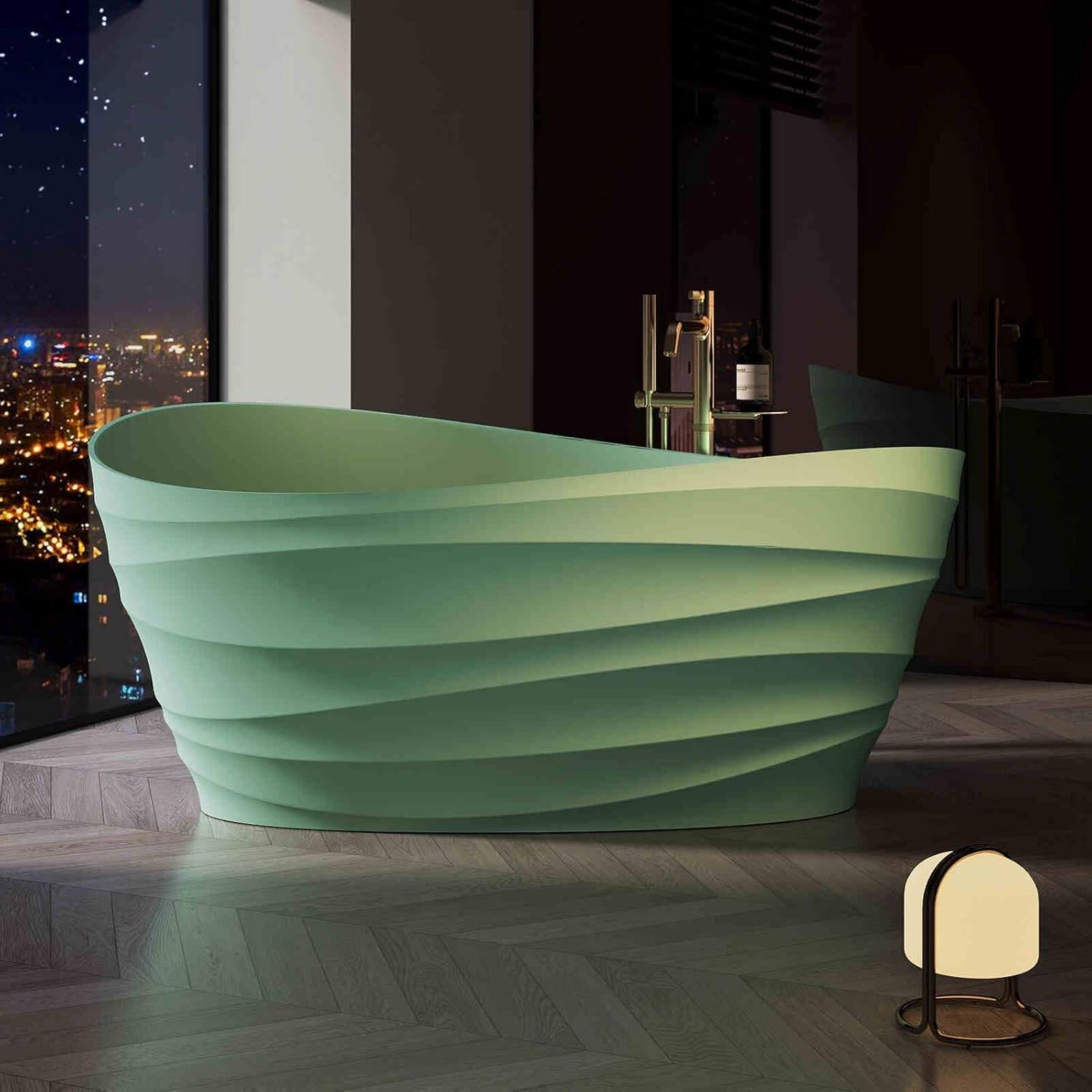






















Space-saving bathtub shipping packaging method - stackable freestanding bathtubs
Packaging requirements for freestanding bathtubs:
Bathtubs are generally categorized by material, including acrylic bathtubs, cast iron bathtubs, steel bathtubs, and artificial stone bathtubs. Regardless of the type, their transport and packaging requirements are basically the same. Because bathtubs (except for stackable freestanding bathtubs) are large and heavy, they are often handled carelessly. Therefore, the packaging method (stuffing method) must meet the requirements for long-distance transportation and safe loading and unloading. One method is palletized freestanding bathtubs.
The basic requirements for packaging are impact and pressure resistance, as well as ease of transport and handling. Generally, each freestanding bathtub is covered with a cardboard box or polystyrene film to protect the enamel surface, and then placed on a wooden pallet. Appropriate protection should be provided around the sides, corners, and legs of the freestanding bathtub (e.g., corners and legs). Wooden frames should be used for horizontal and vertical reinforcement to prevent the goods from falling if the pallet tilts.
Bathroom products are relatively large in both weight and size, and most importantly, their cost is also relatively high. This contrasts sharply with the large-scale transportation and rapid information transmission via the internet, thus placing extremely high demands on logistics. For bathroom product companies, reducing logistics costs has become a key factor in market competitiveness. Bathroom products are considered bulky items in the logistics industry, and logistics costs are directly linked to product weight. Sea freight is the cheapest way to transport bathtubs. Sea freight also ensures the safety of bathroom products during transportation, with a relatively low damage rate. While air freight is faster, it is more expensive. A typical bathtub size is 170*75*60cm, approximately 1 CBM, and weighs 100KG. Palletized freestanding bathtubs are the most common method of shipping by sea.
Packaging method for Schiller bathtubs:
Previously, bathtubs were packaged in wooden frames and metal sheets, but now they are packaged in corrugated cardboard boxes and polystyrene. This new packaging method reduces storage space by more than 50 percent. This is especially true for freestanding bathtubs packaged on pallets or stackable freestanding bathtubs.
Schiller freestanding bathtubs offer professional, safe, stable, diverse, and flexible packaging options, most importantly significantly reducing logistics and transportation costs for customers. Each freestanding bathtub can be individually boxed or stacked (e.g., palletized freestanding bathtubs or stacked freestanding bathtubs). Multiple bathtubs can be stacked in pallet packaging, known as stacked bathtubs, palletized freestanding bathtubs, or stacked freestanding bathtubs.
A. Individual Packaging Method for Single-Unit Freestanding Bathtubs: First, the inner packaging uses protective film and bubble wrap to secure the product. This embedded packaging offers advantages such as shock absorption, impact resistance, odorlessness, moisture resistance, and corrosion resistance. Each individual bathtub is then individually packaged in a cardboard box. This packaging method ensures high assembly efficiency and quality. Horizontal and vertical straps are used for securing and protecting the product. The strapping materials are primarily polyethylene, polypropylene resin, and cold-rolled steel strip, but nylon and polyester are also used. The strapping has high tensile strength, possessing not only the tensile strength of steel strapping but also impact-resistant ductility, ensuring the safe transport of palletized products.
B. Stacked Freestanding Bathtub Packaging Method: One method involves stacking the freestanding bathtubs themselves. One bathtub is placed inside the slot of another freestanding bathtub, and the bathtubs are then bundled and placed on a vertically positioned tray (see figure). A layer of cardboard is laid on the front of each freestanding bathtub, with the edges folded into the inverted U-shaped groove along the edge of the bathtub. Foam strips are inserted into the groove, forming a storage cavity between the cardboard and the inner wall of the U-shaped groove. The detachable support accessories of the freestanding bathtub are installed in this cavity. Several cardboard-covered freestanding bathtubs are stacked together to form a bundle, which is then placed on a tray that maintains its vertical position. The tray includes a base plate, a rear frame fixed to the rear end of the base plate, and two side rails, one on the side end of the base plate and the other on the side of the base plate. The rear frame is securely connected. This tray-style freestanding bathtub packaging not only ensures protection but also...
Advantages of stacked freestanding bathtub packaging: saves space, greatly reduces transportation costs, and speeds up packaging accordingly.
1. Stackable freestanding bathtubs can be stacked in multiple layers for easy transport and storage, saving storage and transportation space. When stored in a warehouse, they can be folded up, saving a significant amount of space.
2. Equipped with packing straps for enhanced packaging, ensuring secure product packaging and safe transport. (For palletized freestanding bathtubs).
To ensure that products are delivered to customers intact, Schiller ensures that products are properly and securely packaged using appropriate materials.
To better help clients enhance their market competitiveness, the Schiller Packaging team leverages its extensive experience in bathtub packaging (whether packaging freestanding bathtubs, stacked freestanding bathtubs, or individual freestanding bathtubs) to assist and support clients in eliminating and reducing incidents related to defects and damage. "We are constantly negotiating services and consumables to ensure our clients receive the most competitive costs," said the Schiller Packaging team.
Bathtub packaging recommendations:
Freestanding bathtubs should have no room for movement – the product and packaging should be flush against the box walls. This includes freestanding and stackable bathtubs, including those packaged on trays.
The product should be packaged in crates to increase stacking strength during loading and prevent the cardboard boxes in the open area in the middle of the bathtub from becoming dangerous.
The product should be completely secured. Bathtubs with feet must have a suspension or weight redistribution mechanism, such as wooden blocks.
The bathtub itself is wrapped in polyethylene film.
Use a low-tack adhesive film or PE film to protect the aesthetics of your freestanding bathtub. Take care to protect the inside and edges of the bathtub from scratches and stains.
The packaging materials surrounding the product should be stretched or secured in place with tape to prevent the packaging from shifting.
Use PE, EPS, honeycomb, or building blocks at the edges to enhance impact protection. All protective materials should be at least 40mm thick high-density materials (1.0 PCF EPS or EPE foam, honeycomb, corrugated pads, folded corrugated pads).
What impact does good bathtub packaging and logistics have on customers? (Especially for palletized freestanding bathtubs and stackable freestanding bathtubs)
Packaging plays a crucial role in logistics for transporting goods, particularly freestanding bathtubs. Packaging is the end point of production and the starting point of logistics. Products are packaged according to specific quantities, shapes, weights, and dimensions, using appropriate materials and containers based on their nature and shape. This affects not only loading, unloading, and handling, but also the ease and speed of warehouse storage, measurement, and inventory, directly impacting the efficiency of the sports equipment and warehouse operations.
What are the characteristics of good bathtub packaging (e.g., tray-packaged freestanding bathtubs and stacked freestanding bathtubs)?
1. Product protection: Maintaining product quality and integrity, and preventing impacts are fundamental packaging requirements. This includes addressing the impact of various natural factors (temperature, humidity, sunlight, harmful substances, biological agents, etc.) on product quality during logistics. Impacts and vibrations during loading, unloading, and handling can also damage products. To maintain product integrity during placement and transportation, scientific packaging is necessary to avoid the influence of various adverse external factors.
2. Convenient loading, unloading, storage and transportation. Suitable packaging shape, size, weight and material can facilitate transportation, loading, unloading and warehousing operations, and improve the efficiency of other logistics links.
3. Save costs and improve efficiency. Logistics costs in the market are calculated based on weight or volume. Good product packaging can significantly improve transportation efficiency and reduce logistics costs by reducing weight or volume.