
 USD
USD GBP
GBP
 EUR
EUR
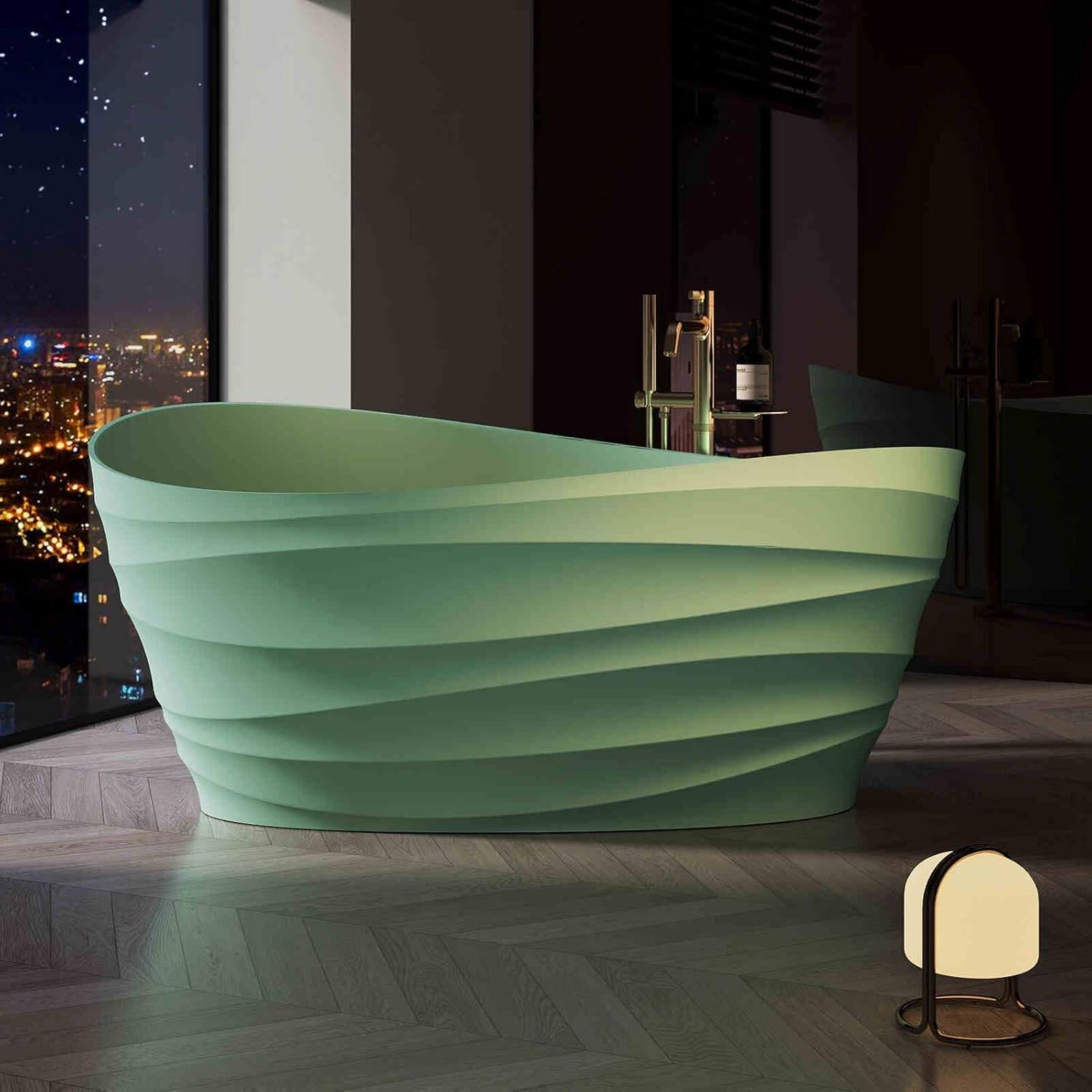

How much do you know about modern freestanding bathtubs?
What is a modern freestanding bathtub? What are the advantages of a freestanding bathtub?
With the improvement of living standards, many homeowners are starting to install bathtubs in their homes. Many star-rated hotels also provide bathtubs. The variety of bathtubs on the market is increasing. One type is called the modern freestanding bathtub, which is similar to a freestanding bathtub. Compared to other types of bathtubs, it is more convenient to use. So what is a freestanding bathtub? What are the advantages of a freestanding bathtub? Let's find out together.
What is a freestanding bathtub?
1. Freestanding bathtubs are freestanding and can be placed directly in the bathroom. Freestanding bathtubs can be placed wherever there is space. Schiller Bathrooms' modern freestanding bathtubs can be customized to any size.
2. A freestanding bathtub is a bathtub that is placed directly on the bathroom floor. It has a smooth and clean interior and exterior, and does not need to be against a wall; it can be placed independently in the bathroom. This method is convenient to install and easy to maintain, making it suitable for bathrooms where the floor has already been renovated.
What are the advantages of a freestanding bathtub?
1. Modern freestanding bathtubs don't require bricks or even a skirt. Their unique effect is sought after by avant-garde trendsetters, hence their high price. However, the comfort and freedom offered by a modern freestanding bathtub are unmatched by ordinary bathing facilities. Broadly speaking, any bathtub separated from other items can be called a freestanding bathtub. Many whirlpool bathtubs also fall into this category.
3. The side of a non-freestanding bathtub against the wall is very difficult to clean, but modern freestanding bathtubs can be cleaned very well and can be washed 360 degrees. There are no gaps between the freestanding bathtub and the wall, simplifying maintenance.
4. The existence of a freestanding bathtub has its "demands." It has high requirements for bathroom space, installation, and harmony with the surrounding environment. It can dispel the fatigue of the day and bring people a comfortable and luxurious experience. Its excellent quality, unique style, and heritage are all irresistible charms. Choosing it is not just a simple bathing tool, but a bathing culture. Its existence is not just to provide people with a bathing space; it will become more and more charming over time.
A comparison of the advantages and disadvantages of common materials used in modern freestanding bathtubs. Bathtub materials include:
1. Acrylic bathtubs offer a wider variety of colors, styles, and shapes, with a higher gloss finish;
2. Cast iron bathtub, with good heat retention, easy to clean, and quiet operation when flushing;
3. Wooden bathtubs do not generate static electricity, have good corrosion resistance, and are considered environmentally friendly materials;
4. Steel bathtubs are pressure-resistant, wear-resistant, heat-resistant, and durable.
5. Ceramic bathtubs have a smooth and delicate surface, are easy to clean, and come in a variety of styles.
Acrylic bathtub
Advantages: Acrylic bathtubs are quite common in the market. Modern freestanding acrylic bathtubs are made of soft and easy-to-process material. They come in a wide variety of shapes and colors, giving consumers more choices to pursue individuality. Acrylic bathtubs have excellent heat retention, keeping the tub warm for extended periods in winter. They are lightweight, making them easy to transport and install. Surface scratches can be repaired.
Schiller Sanitary Ware specializes in the research, development, production, and sales of acrylic bathtubs. Its products are highly praised by customers both domestically and internationally.
Disadvantage: The surface is easily scratched.
2. Cast iron bathtub
Advantages: Cheaper, lighter and easier to install.
Disadvantages: Due to manufacturing processes and materials, steel bathtubs have monotonous designs and limited color options, resulting in a limited range of styles and types to choose from. They also have poor heat retention, produce loud noise when filling with water, and the overall casting process is relatively complex. If the enamel layer is subjected to excessive impact during transportation and use, it can crack, leaving the tub unusable. Furthermore, they can rust and become unusable.
3. Ceramic bathtub
Advantages: Modern freestanding ceramic bathtubs are made from ceramic clay, resulting in a beautiful glaze. Their smooth, delicate surface is easy to clean, and they come in a variety of styles, making them very popular. However, when choosing a ceramic bathtub, it's crucial to pay attention to the glazing process and consider the surface's water absorption and expansion rate, which is similar to other types. Smaller models can be considered high-end bathtubs.
Disadvantages: Heavy and difficult to transport, susceptible to bumps and knocks, smooth and slippery, cracks and scratches cannot be repaired.
4. Wooden bathtub
Advantages: Relatively environmentally friendly, excellent heat retention, and a deep tub that allows for complete immersion of every part of the body. Wooden bathtubs do not generate static electricity, making them more environmentally friendly and healthier to use.
Disadvantages: High price, requires regular maintenance, cannot be exposed to direct sunlight for extended periods, and cannot be placed in a humid environment for long periods to prevent leaks and deformation.
5. Steel bathtub
Advantages: Durability is the biggest advantage of cast iron bathtubs. In addition, they also feature a gentle color, low water filling noise, and ease of cleaning.
Disadvantages: Due to high production costs, cast iron bathtubs are generally expensive, have relatively simple designs, limited color options, and average heat retention. They are also heavy due to the material, making them inconvenient to install and transport.
These are the different characteristics of bathtubs made of common materials. Buyers can choose a modern freestanding bathtub that suits their needs and preferences.
Analysis of the Current Status and Development Prospects of the Bathtub Industry in 2022
Modern freestanding bathtubs are typically installed in home bathrooms, hotels, and shower/bathroom facilities, and are mostly made of acrylic or fiberglass. Bathtubs can be categorized by function into standard bathtubs, seated bathtubs, and whirlpool bathtubs. The prices of various types of modern freestanding bathtubs vary considerably. Based on the materials used, bathtubs can be divided into acrylic bathtubs, cast iron bathtubs, wire enamel bathtubs, and wooden bathtubs. Acrylic bathtubs are the most common on the market, accounting for approximately 80% of the market. With global economic growth and the upgrading of home bathroom product consumption, the global demand for bathtubs will continue to grow, especially for high-end bathtubs.
In recent years, with the upgrading of consumption, consumer demand for bathtubs has been increasing, and the market for modern freestanding bathtubs has grown rapidly in developing countries outside of developed countries. At the same time, the development of the high-end hotel industry has also increased the demand for bathtub products. As the bathroom industry develops further, although bathroom products receive the most attention in developed countries, the market in developed countries is nearing saturation, while developing countries have enormous potential. This market potential has attracted widespread attention from major home furnishing companies, and the developing country market will become a new focus for bathroom companies vying for market share.
The future competitive arena of the modern freestanding bathtub industry will shift to developing countries. It can be said that developing countries represent a blue ocean market for the future of bathroom fixtures. Geographically, traditionally developed regions remain dominant, but with the development of countries worldwide, the bathroom fixture market is quietly changing, giving rise to a new landscape.
What is the origin of the bathtub ?
Ancient people used wooden tubs for bathing, as well as heated tubs called "floor basins." Both wooden tubs and floor basins were precursors to modern freestanding bathtubs. The earliest bathtubs were wooden tubs lined with lead, followed by marble tubs. From the 18th century onwards, metal bathtubs became popular. The most common material was tin-plated copper. The most significant characteristic of this material is its rust resistance. The interior of the bathtub could be tin-plated or even silver-plated. There were also modern freestanding bathtubs with joinery, veritable antique furniture, with backrests or cushions, in the form of sofas or benches, suitable for single or double use. In the late 18th century, the famous wooden shoe bathtub appeared, composed of more than 20 metal parts, named after the shape of a shoe, and equipped with a funnel and a drain. The comfort of modern bathrooms began in 19th-century England, with the emergence of modern freestanding bathtubs for wave baths, eventually evolving into enclosed shower rooms. By the end of the century, new materials such as acrylic and cast iron appeared.
Bathing is a habit that has existed since the dawn of humanity. However, the concept of a "bathroom" didn't exist in early times, let alone a bathtub. Natural streams and rivers served as public bathing places. The first true bathtub can be traced back to 1700 BC. By the mid-19th century, modern freestanding bathtubs had gradually become popular. At this time, bathtubs already exhibited a very distinct modern style. Today, modern freestanding bathtubs are no longer a symbol of social status; with the development of the times, they have become an integral part of people's lives.