
 USD
USD GBP
GBP
 EUR
EUR









Bathtub Faucet Buying Guide!
When you're buying your ideal bathtub faucet, the following information will guide you in choosing the right fixture for your bathroom. First and foremost, it's important to know that bathtub faucets and bathroom sink faucets are not interchangeable. Water flow rate, installation type, and features such as thermostatic control and handheld showerheads are what differentiate bathtub faucets from sink faucets. We encourage you to read on to learn about five bathtub faucet styles, as well as features and add-ons available for upgrades.
1. Types of bathtub faucets
(1) Independent
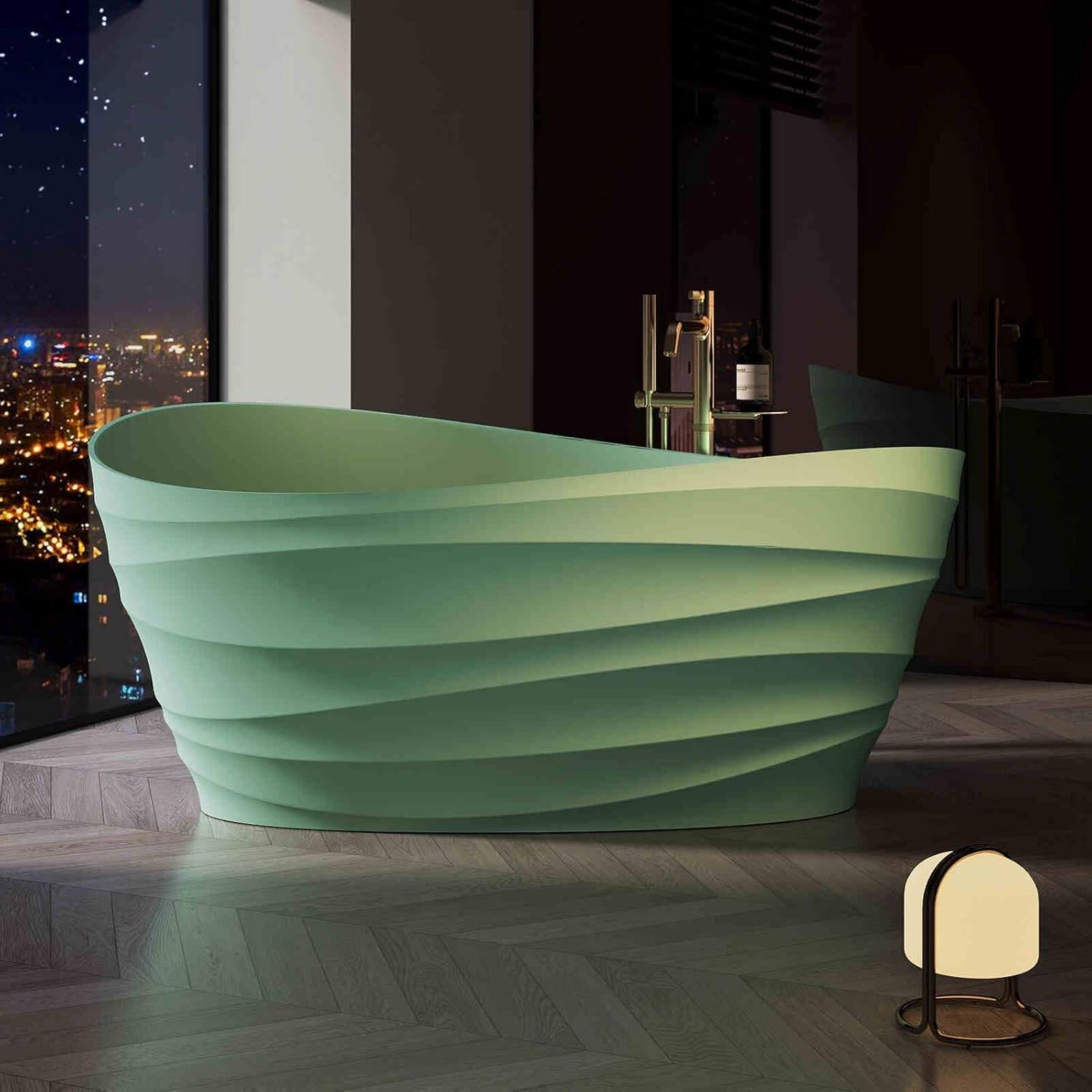
Also known as a freestanding bathtub faucet, this type of bathtub filler is fixed to the floor and stands upright above the edge of the bathtub. The water supply line connects to its water source under the finished floor, typically with a set of shut-off valves a few inches above the floor. For this reason, most freestanding bathtub fillers require underfloor access. If your bathroom is on a concrete slab, consult a professional to determine if a freestanding faucet is suitable for your application. Freestanding bathtub faucets are not connected to the bathtub, meaning no faucet hole is required. This also provides flexibility in deciding where to install the faucet. Freestanding faucets can be found in a variety of finishes, such as chrome, brushed nickel, polished brass, oil-brushed copper, polished nickel, and even brushed or polished stainless steel.
(2) Edge type
This type of faucet is installed on the upper edge of the bathtub. Installation requires two faucet holes, and the distance between the two holes may vary. Measure the center-to-center distance between the two holes to ensure a precise fit with the faucet. This measurement is called a "center measurement." For example, if your bathtub has a 7" faucet hole in the center, you will not be able to install an unfinished 8" faucet. Although uncommon, you can also install a deck-mount bath filler on a platform around the bathtub. If you plan to install the faucet outside the bathtub, make sure the spout of the faucet you purchase can extend enough into the bathtub to properly fill with water.
A faucet installed on the edge of a bathtub will require a water pipe to connect it to the water supply system. Rigid or inflexible water pipes are most common; they connect to the faucet from below the rim of the tub and then to the water supply system under the floor. For this type of application, an underfloor channel will be needed, just as a freestanding faucet requires. If an underfloor channel is not available, a flexible water supply line can be used to connect the faucet to its water supply system through the bathroom wall.
(3) Bathroom wall-mounted installation
Wall-mounted faucets are exactly the same; they are installed on the bathroom wall next to the bathtub. The bathtub doesn't need a faucet hole because this type of faucet isn't connected to the bathtub in any way. Wall-mounted bathtub faucets are the best solution for bathrooms where the floor is not usable. Because it connects directly to the water source behind the bathroom wall and doesn't require exposed pipes, this style of faucet is the most economical option, saving on the extra cost of plumbing. A coupler is used to connect the faucet to the water source behind the wall, which is usually included in the faucet itself. The coupler increases the distance the nozzle reaches the bathtub, typically by 2". Longer coupler lengths can be found in 4" or 6".
(4) Wall-mounted bathtub
These faucets require holes drilled into the bathtub wall and are typically closer to the holes than those for edge-mounted faucets. The standard center-to-center distance for bathtub wall-mounted faucets is 3-3/8". However, it's important to measure the distance between the faucet holes in your bathtub before purchasing a faucet. Especially for older bathtubs, the faucet hole center-to-center distance can vary from 3-1/2" to 8-3/4". These faucets often have a small downward-facing spout for filling the bathtub or a high gooseneck for a more elegant look.
Like edge-mounted bathtub faucets, wall-mounted bathtub faucets also require piping to connect the faucet to the water source under the floor. This means that standard hard water piping will need to be used to run under the floor. If the water supply comes from behind the wall instead of the floor, flexible piping can be used.
(5) Bathtub countertop type
Typically used with built-in bathtubs or whirlpool tubs, Roman basin faucets are installed around the basin. This type of faucet requires three or more faucet holes for installation, one for each handle and one for the faucet itself. Most Roman basin faucets also come with a handheld showerhead, which requires one or two additional holes for installation. Because installation requires extra space, Roman basin faucets cannot be installed at the edge of the bathtub. If you want to use this type of faucet with a freestanding bathtub, you must have a platform next to the bathtub for installation.
2. Functions and Add-ons
(1) Handheld shower head
Most faucets designed to be paired with freestanding bathtubs will come with a handheld showerhead that connects to a 4' or 5' hose. The handheld showerhead is housed in a base that is also fixed to the faucet. Handheld showerheads serve as an alternative to standard overhead showerheads due to their ease of use. Therefore, making rinsing easier, many people also find handheld showerheads useful for cleaning the bathtub itself, as well as a convenient tool for bathing children or pet dogs.
(2) Shower conversion kit
If the handheld showerhead isn't enough for your needs, you can also purchase a showerhead conversion kit to convert the handheld showerhead into an overhead showerhead. To install a showerhead conversion kit, remove the handheld showerhead from the faucet and replace the overhead showerhead with a riser. Some shower conversion kits include a two-way splitter, allowing you to reinstall the handheld showerhead. This way, you can use either the handheld showerhead or the overhead showerhead as an option.
(3) Constant temperature control
Many bathtub faucets now come with a thermostatic mixing valve instead of the traditional separate manual hot and cold water mixing valve. A thermostatic mixing valve automatically maintains the set water temperature by regulating temperature fluctuations at the inlet and immediately adjusting the ratio of hot and cold water discharged. In most homes, a thermostatic valve works similarly to an HVAC thermostat; you set the temperature (usually in degrees Celsius on the faucet), and water flows from the nozzle at that temperature.