
 USD
USD GBP
GBP
 EUR
EUR







How to buy a bathtub that suits your bathing needs?
Choosing the right bathtub is a difficult decision. There are many types of bathtubs on the market, but people know very little about their quality, differences, and potential benefits. Therefore, today we'll discuss which types of bathtubs can enhance your bathing experience!
1. Bathtub comfort
If you're looking to completely relax and enjoy your bath in a comfortable hot tub, then you need to consider the depth of the tub. Why? The main reason is that most bathtubs on the market aren't deep enough. When you're sitting in the tub, the water level doesn't even reach your chest. Many bathtubs now feature special designs, but this often comes at the cost of sacrificing the shape and comfort of the backrest. For example, many oval bathtubs offer backrests, but most backrests don't provide sufficient relaxation. What are the specifications for a comfortable bath?
(1) Bath depth: A bathtub depth of at least 50 cm is required to ensure the body is submerged. The most comfortable bathtubs are usually about 60 cm deep;
(2) Bathtub width: The perfect width depends heavily on your body size. Do you want to be able to support your arms with the handrails? Then it's important that the bathtub isn't too wide. Also, if you want to buy a double bathtub, a square bathtub is recommended; you'll need a large tub (at least 85 cm) and/or longer (at least 180 cm). Corner baths are also generally suitable for two people (e.g., 150 x 150 cm); in many models, you can lie side by side.
(3) Bath length: The most common bath length is 160, 170 or 180 cm, but it is also possible to find ultra-short baths such as 150 cm or ultra-long baths such as 190 cm.
(4) Bathtub bottom: Most bathrooms have a flat bottom. The most comfortable bathrooms have an ergonomic bottom with the back lower than your feet. This means your body will no longer slip: you remain stable and well-supported while bathing. Consider the internal dimensions of the bathtub, especially the floor length. Some bathtubs have very thick rims, so the length/width of the bottom is much smaller than the external dimensions. Also, look more precisely at the exact shape and orientation of the backrest. For freestanding bathtubs , the thickness of the rim is relevant: therefore, choosing a comfortable bathtub isn't always obvious. So, it's helpful to do your research before making an informed choice.
2. Should you choose a standalone or embedded system?
An embedded bathtub refers to a bathtub whose exterior is not yet finished. This means the exterior of the bathtub must be covered, usually with a tiled wall. Sometimes matching side panels can be purchased.
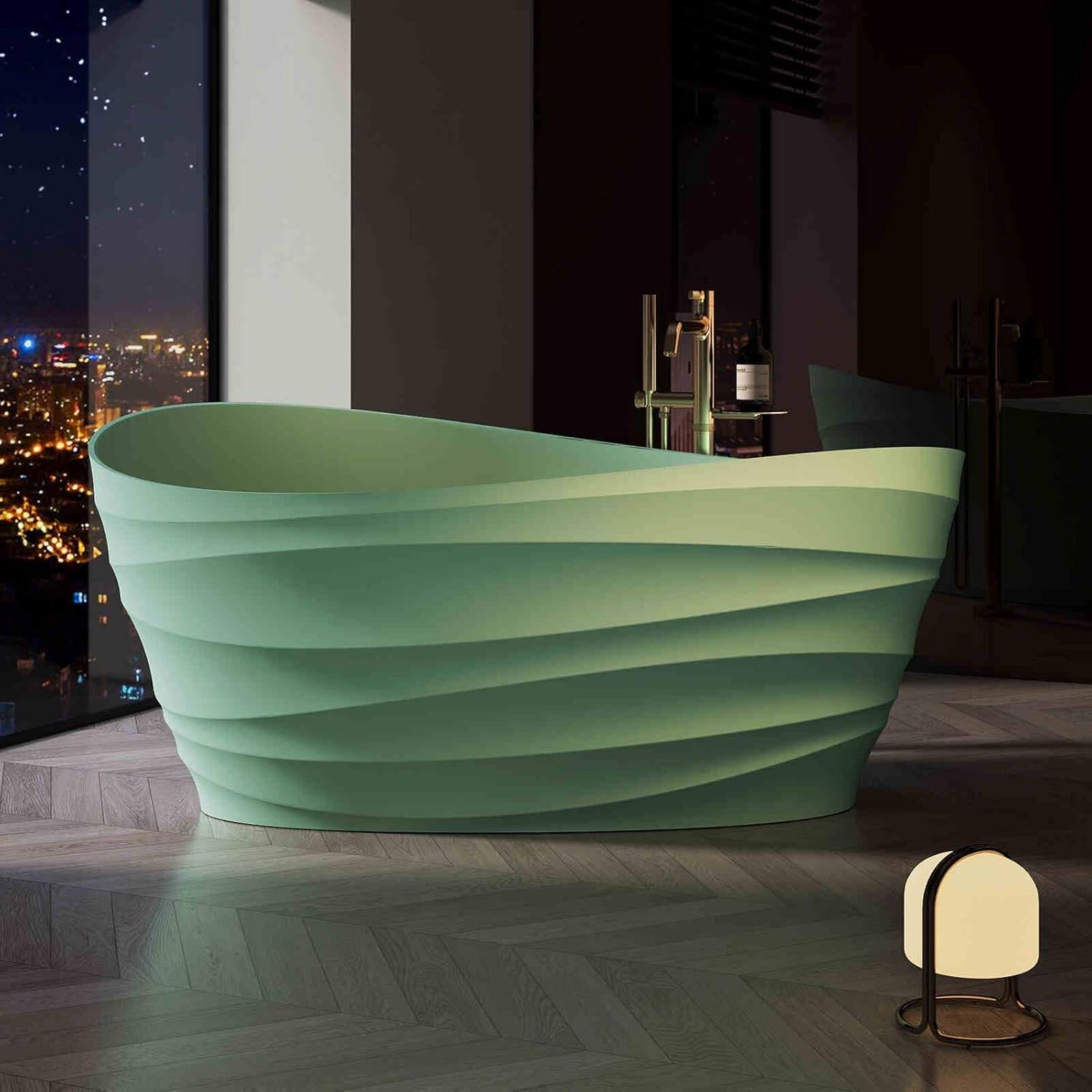
A freestanding bathtub is a bathtub that stands independently in a room. It can be placed on your lap or directly on the floor. There are also freestanding bathtubs that stand against one or both walls. The choice between a freestanding or built-in bathtub depends on personal preference, budget, and desired level of comfort. In short, the main difference between the two types of bathtubs is:
(1) Because freestanding bathtubs are finished externally, they are generally more expensive than built-in bathtubs. However, installing a built-in bathtub is easier than installing one that requires surface finishing.
(2) Freestanding bathtubs have a spacious feel and usually look very nice;
(3) The deepest freestanding bathtub (approximately 45 cm) is much deeper than the deepest tub (approximately 60 cm). Less depth means the body won't be fully submerged, thus reducing comfort. Freestanding bathtubs also typically have sharper edges than built-in bathtubs. This means reduced neck comfort. Many neck support cushions cannot be placed in many freestanding bathtubs. Therefore, freestanding bathtubs are generally preferred if bathroom design is most important, while built-in bathtubs are usually preferred if comfort within the tub is paramount.
3. Bathtub Quality Selection
A bathtub isn't a product you buy every day. Ideally, you'd want your bathtub to stay in good condition for the entire lifespan of your bathroom (at least 15 to 20 years). Many bathtubs don't achieve this.
(1) What are the main characteristics of quality?
A. The edges of the bathtub should be flat and firm;
B. Pay attention to any errors or irregularities in the shape or edge of the bathtub;
C. Use a freestanding bathtub: You should not see a seam between the top and bottom of the bathtub;
D. Inquire about the thickness of the acrylic layer; preferably, the acrylic layer should be at least 5 mm thick.
(1) What are the main risks of a substandard bathtub?
A. Over time, the surface of the plating solution changes color;
B. Cracks appear on the surface of the plating solution;
D. The bottom of the bathtub prolapses.
4. Should we choose a system with a whirlpool bathtub?
When choosing a bathtub, another question arises: should it have a whirlpool or not? Is it worth having a whirlpool system? What are the benefits of a whirlpool bathtub system ? There are many different whirlpool systems on the market. The best methods developed to have a real impact on the human body are stimulating the nervous system with bubbles at the bottom of the tub and/or actively massaging muscles with water flow from the sides or sometimes the bottom. Bathing in a high-quality whirlpool bathtub will provide a massage experience, allowing your body to relax and release the day's fatigue.
Another type of system is the oxygen system: oxygen is introduced into the bath to provide more energy. Unfortunately, the quality of different vortex systems varies greatly. For example, some systems have too soft a water flow, are too noisy, or have unreliable controls (especially in pneumatic operation). Our advice to avoid disappointment: test the vortex system before purchasing! Also, make sure your chosen supplier will provide quality service.
5. Bathtub faucet selection
In reality, you can choose from two wide range of solutions: a wall-mounted faucet or a faucet installed on the edge of the bathroom. The second solution is generally not feasible with a freestanding bathtub . The advantage of a tap on the rim is that no holes need to be drilled in the wall. It depends on personal preference and ease of installation.