
 USD
USD GBP
GBP
 EUR
EUR
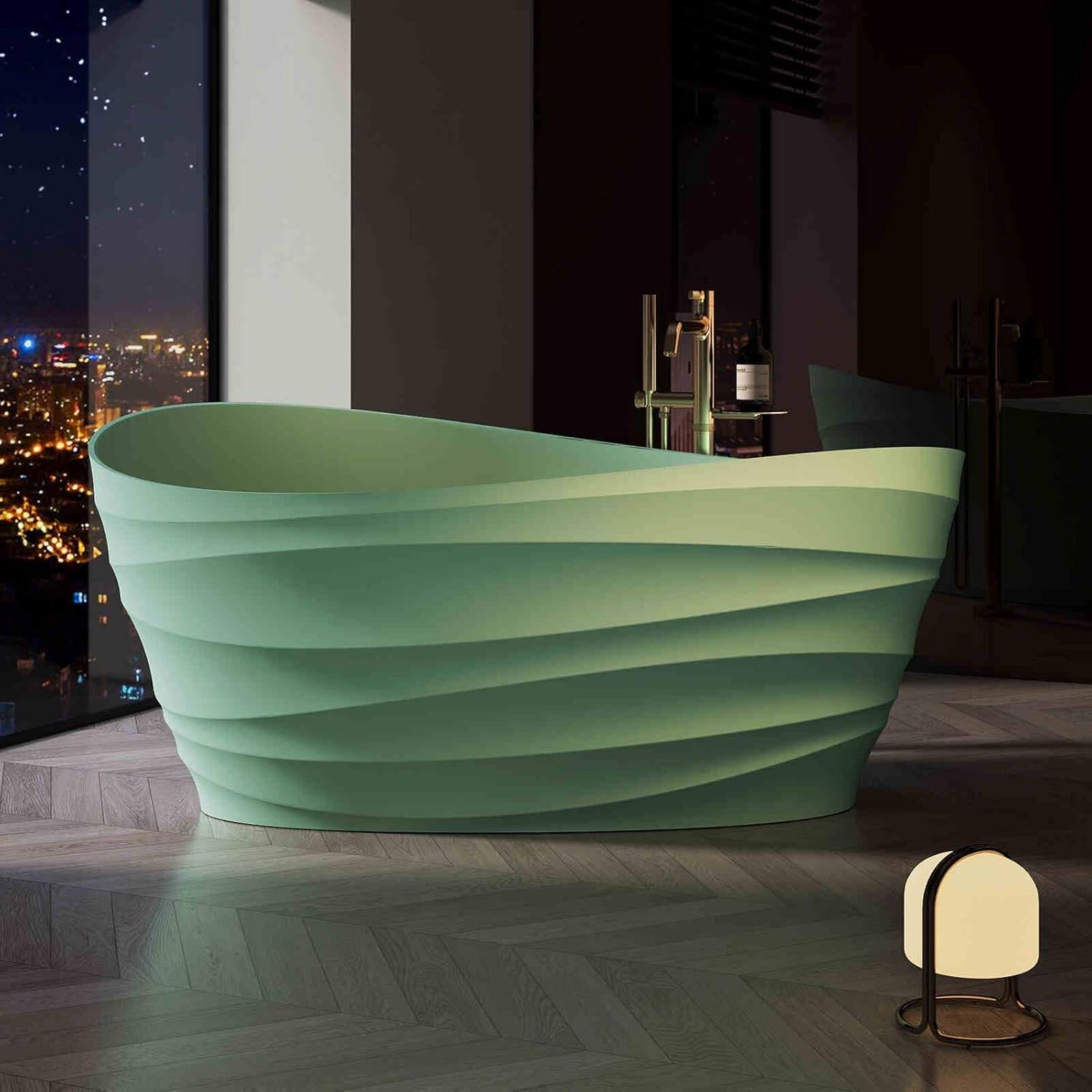




Some things about bathtubs?
Many people dream of having a bathtub, often imagining themselves returning home after a long day at work, soaking in a comfortable, large-footed bathtub with flower petals scattered around, light aromatherapy diffusers, and soothing music, enjoying a rare moment of relaxation for both body and mind. Even though there are countless reasons to choose a showerhead-convenience, time-saving, effortless, cost-effectiveness-the reason for choosing a bathtub is only one: "I like it."
Of course, bathing is not a modern invention. More than 3,000 years ago, people invented the bathtub and began to enjoy the pleasure of bathing. Humanity has been constantly exploring and progressing in its pursuit of "how to bathe and how to take a comfortable bath."
The history of bathtubs
The culture of comfortable bathing has been passed down for thousands of years, and the last 40 years have been a period of rapid development for the bathtub industry. Beyond cleanliness, bathing is also seen as a form of respect or baptism. As far back as the Paleolithic era, humans have benefited from river water: from then on, bathing became a part of human life.
The predecessor of the bathtub, the claw-foot bathtub, was an exclusive product of high-ranking officials and nobles in ancient my country. As early as the Qin and Han dynasties, people began to use wooden tubs for bathing. However, due to its poor waterproof performance and susceptibility to rot, this type of bathtub was quickly phased out, and natural marble bathtubs soon replaced it.
Rome – The Beginning of an Era of Prosperity
Bathing signifies relaxation, physical recovery, and ultimately, health. From 27 BC to 476 BC, Rome experienced unprecedented economic and social prosperity, providing a rich material foundation for the development of claw-foot bathtubs and other bathroom fixtures.
The Tang Dynasty in its golden age – Yang Guifei sparked a bathing craze in China
The story of Yang Guifei bathing is one of the most popular in China. The two palace-style bathhouses are symmetrical, and at Huaqing Pool, one can feel the scene of Yang Guifei bathing in the "Praise Concubine Pool".
18th Century – The Popularity of Metal Bathtubs
Metal bathtubs have been popular since the 18th century. The most common material is tin-plated copper. The biggest advantage of this material is that it does not rust. Claw-foot bathtubs can be tin-plated or even silver-plated, and are designed for single or double use.
Unprecedented prosperity after the Industrial Revolution
After the 18th century, the development of sanitary ware ushered in its second period of prosperity. The Industrial Revolution provided technological support and endless possibilities for the innovation of toilets and the emergence of water heater systems. The late 19th century is also known as the "period of toilet expansion."
Fashion is always changing, but the bathtub itself remains the same.
Over time, bathtub materials have evolved from wood to cast iron enamel, ceramic, steel enamel, artificial stone, and acrylic, and their shapes have also diversified. Modern bathtubs have not only changed the materials but also overcome the limitations of their previous single function. Today's foot bathtubs offer multi-functional applications, massage, and heating features. These characteristics not only greatly enhance the bathtub's sophistication but also improve the enjoyment and comfort of bathing.
Before the 1980s, cast iron enamel-coated foot bathtubs became popular in bathrooms.
Before the 1980s, cast iron enamel bathtubs dominated the market, accounting for 65% of the global market. In other countries, many cast iron bathtubs were used for generations, their durability being their biggest advantage. However, due to their susceptibility to chipping and loss of luster, cast iron bathtubs were generally expensive. Due to material constraints, they were gradually phased out in the 1990s.
From the mid-1990s to the present – the development trend of acrylic bathtubs
Then, starting in 2000, acrylic bathtubs became dominant, accounting for about 85% of the global market. Experts predict that acrylic bathtubs will become increasingly common in the future, while bathtubs made of other materials will be largely phased out.
Why are acrylic bathtubs so popular?
The green and environmentally friendly acrylic bathtub is the only one
The reason is that the British company ICI invented the high-polymer material PMMA. ICI's acrylic bathtubs retain their color for decades, always looking brand new. They are the first choice for high-quality bathtubs and foot baths. Schiller Sanitary Ware's acrylic bathtubs are stylish, simple, unique, and artistic. The products are colorfast, salt and alkali resistant, anti-aging, impact resistant, UV resistant, easy to clean, and have good heat retention. They can be considered green and environmentally friendly bathtubs. They even have a unique feature: they can be repaired if accidentally scratched.
Acrylic bathtubs offer advantages such as UV resistance, stain resistance, aging resistance, and salt and alkali resistance. As a high-end material, acrylic is widely used in fighter jet cockpit canopies, marine park glass curtain walls, television, computer, and mobile phone screens, high-end eyeglass lenses, contact lenses, non-fading billboards, special claw-shaped bathtub bathroom panels, high-end car headlight covers, and handicrafts.
Whether in commercial five-star hotels or large residential bathroom fixture retailers, an increasing number are choosing freestanding bathtubs and personalized medium-sized bathtubs manufactured by Schiller Bathrooms. Some five-star hotels mistakenly opted for artificial stone claw-foot bathtubs in their bathrooms, only to find the entire space yellowed, making stains impossible to clean and even causing cracks. They ultimately chose bathtubs manufactured by Schiller Bathrooms.
What are the benefits of a bathtub?
For someone who has worked all day, taking a relaxing bath after returning home to wash away the day's fatigue and feel relaxed and comfortable in the bathtub is a very enjoyable thing.
"Bathing is the beginning of a healthy life. The bathroom is the embodiment of a refined life."
On the one hand, bathtubs are undoubtedly items that bring happiness to life, allowing people to enjoy the comfort and pleasure of bathing, thus subtly improving their quality of life. On the other hand, bathing in a bathtub is also beneficial to health. When bathing, body temperature rises, capillaries dilate, and people sweat, warming up the body and relaxing the mind and muscles. At the same time, bathtubs are also very convenient for children, increasing their enjoyment of bath time.
What are the advantages of a bathtub?
1. Comfort and enjoyment
After a long day, you're exhausted both physically and mentally. But if your bathroom has a foot bath, you can lie down, let the hot water flow, close your eyes, and enjoy a moment of tranquility. Taking a bath is a truly enjoyable experience; you can soak in the hot water and relax. You can also use your phone or watch videos while bathing, enjoying leisure time at home and finding mental satisfaction.
2. Convenient and practical
Secondly, bathtubs are very convenient for families with young children. After all, children aren't always cooperative during bath time, and parents worry about them getting cold. But a bathroom with a foot bath offers a completely different experience. Placing some cute toys in the tub can attract children's attention and increase the fun of bathing. Moreover, the water temperature doesn't drop significantly in a short time, so there's no need to worry about them catching a cold.
3. Beneficial to health
The practicality of a bathtub bathroom can be determined based on the health conditions of family members. If there is a sick person in the family, the bathtub becomes even more useful, especially for those with excessive body dampness or ailments in the legs, waist, or back. Daily bathing can relieve body pain and promote blood circulation throughout the body, leaving one feeling warm and comfortable. It can effectively relax muscles and joints, relieve shoulder, neck, and back pain, and even improve sleep quality.
4. Reduce work pressure
If you experience significant work-related stress, a bathtub becomes even more practical. Since most people are currently in a busy and stressful state, a bathtub allows you to relax and relieve stress after get off work.
5. Improve quality of life
Depending on the lifestyles of people in different regions, many people have slightly higher living standards. Therefore, if one has high aspirations for life, then a foot bathtub is a more practical and desirable bathroom option. In fact, anyone with high standards of living can consider installing a bathtub.
Characteristics of different types of bathtubs:
1. Standard bathtub
Most standard bathtubs on the market are made of acrylic. The most practical aspect of these bathtubs is probably their appearance. After all, they are inexpensive and meet basic needs. The functions of these bathtubs are relatively simple.
2. Massage bathtub
Jacuzzis offer a multitude of functions due to their complex structure. They not only incorporate massage systems but also numerous electrical appliances, transforming what would otherwise be a simple foot bath into a highly stress-relieving experience. They can be very helpful for fitness and therapy, and have a significant effect on stress relief. Therefore, among the many types of bathtubs, jacuzzis are one of the most prominent and practical.
3. Solid wood bathtub
In theory, a solid wood bathtub should be classified as a bathtub. Perhaps such products were common in early China, but people are now embracing a new era, so traditional items have become obsolete. In fact, solid wood bathtubs also have excellent practicality. After all, this practicality can be applied to traditional Chinese medicine treatments.