
 USD
USD GBP
GBP
 EUR
EUR


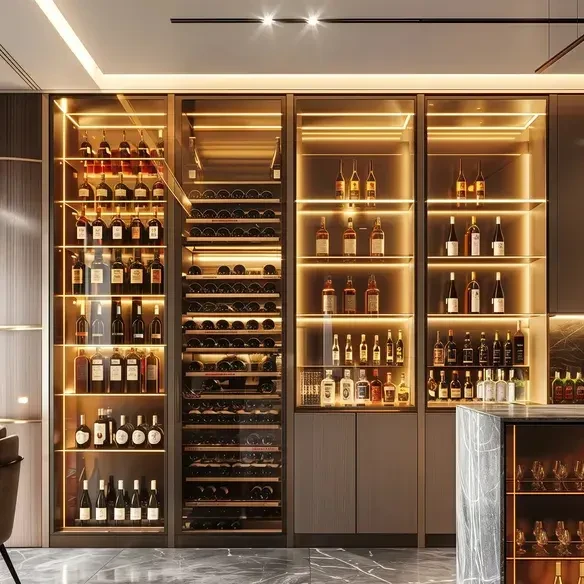
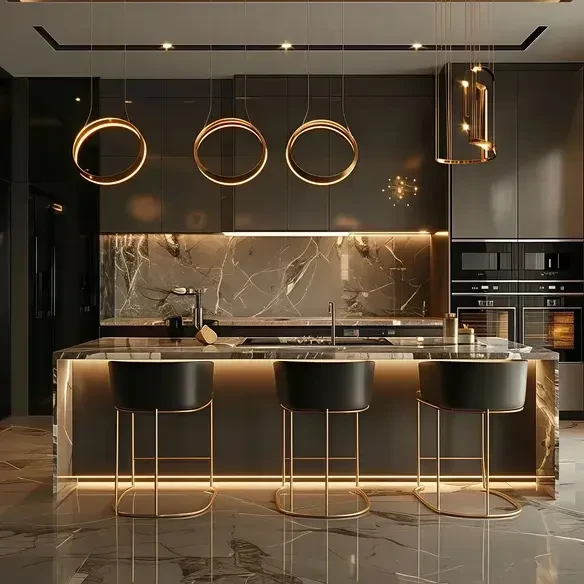
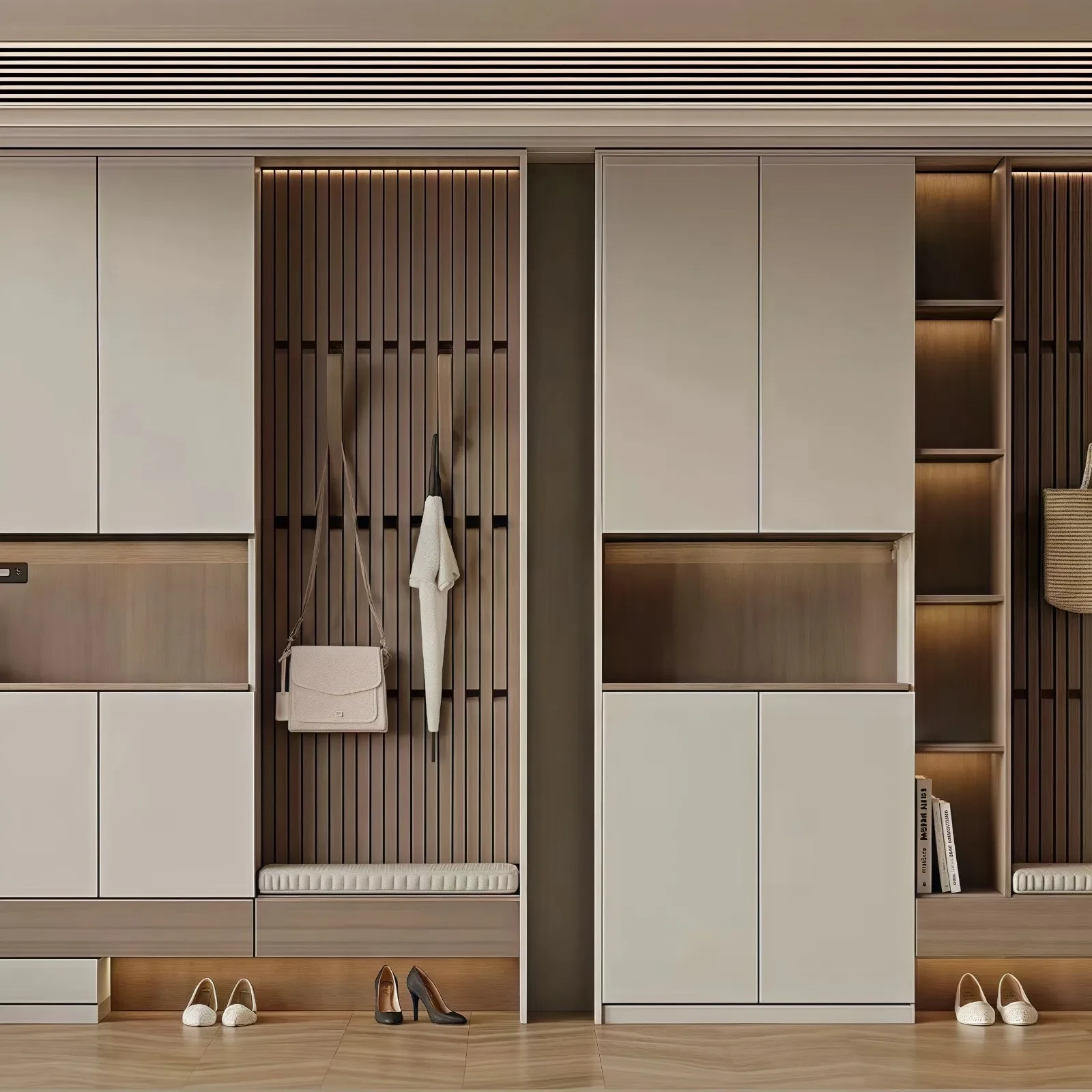
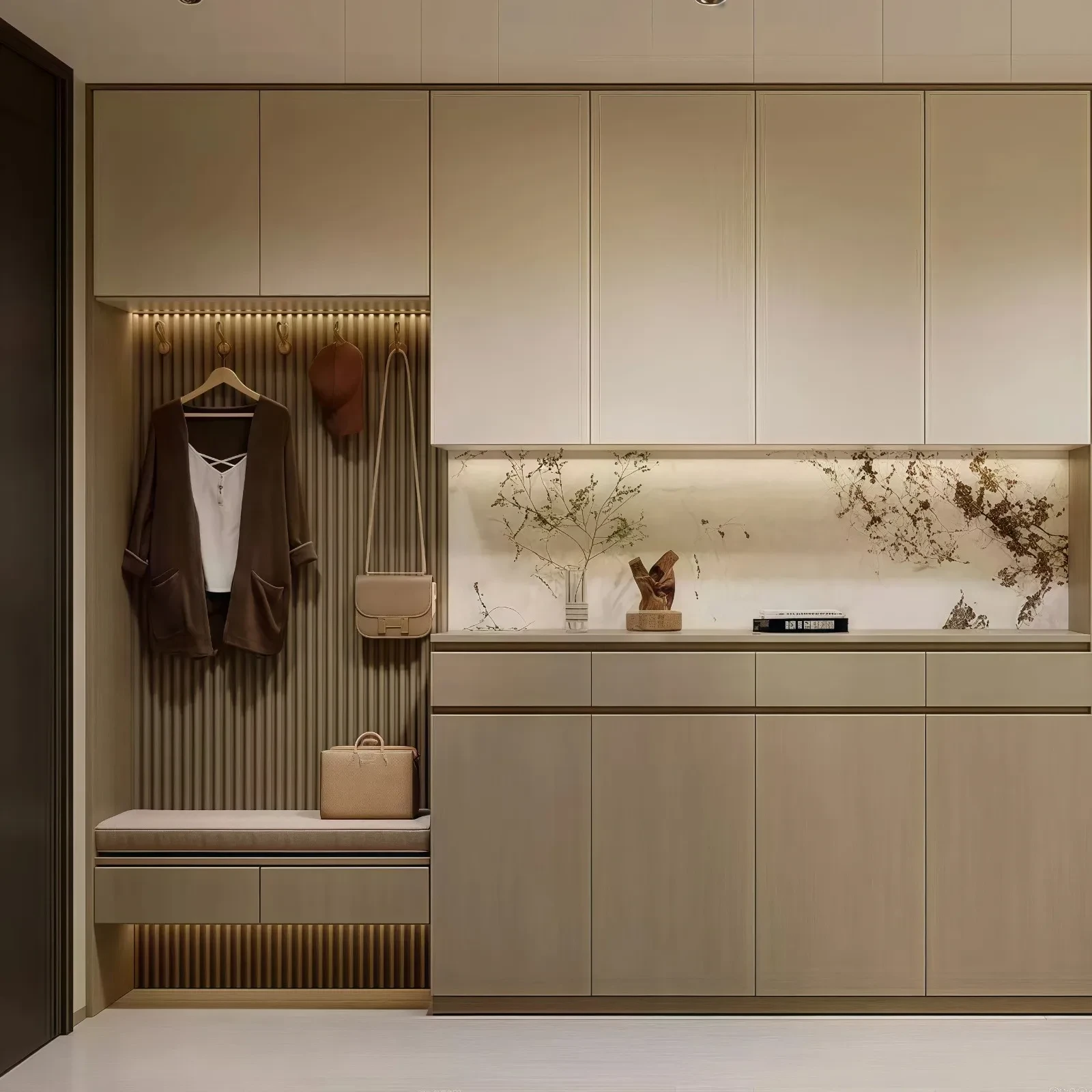
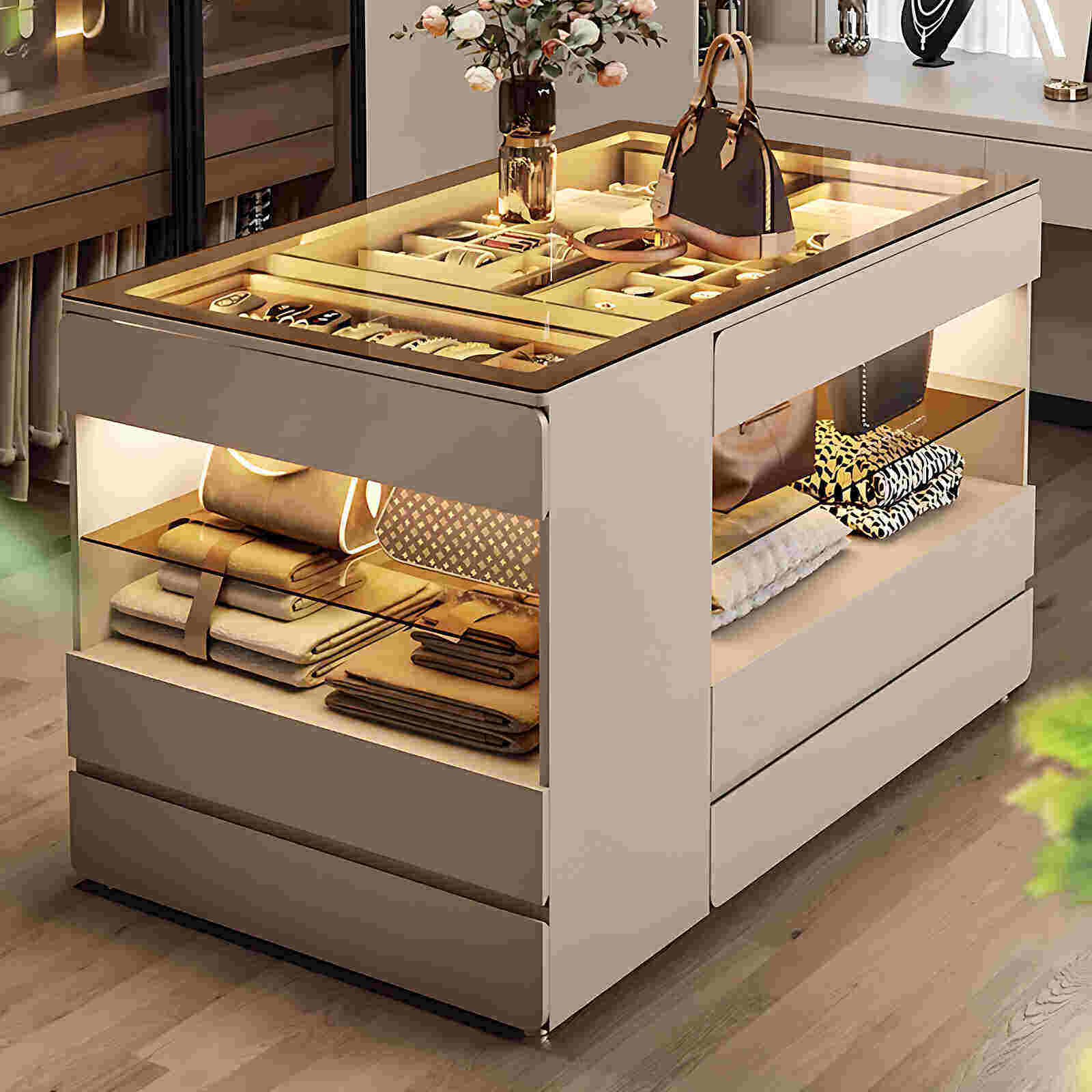
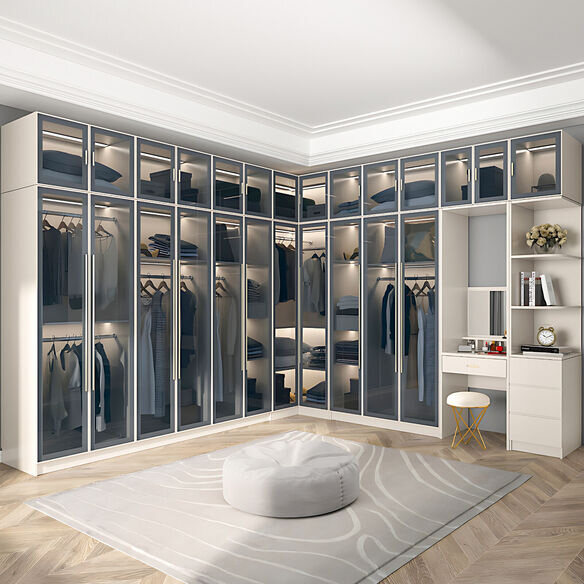

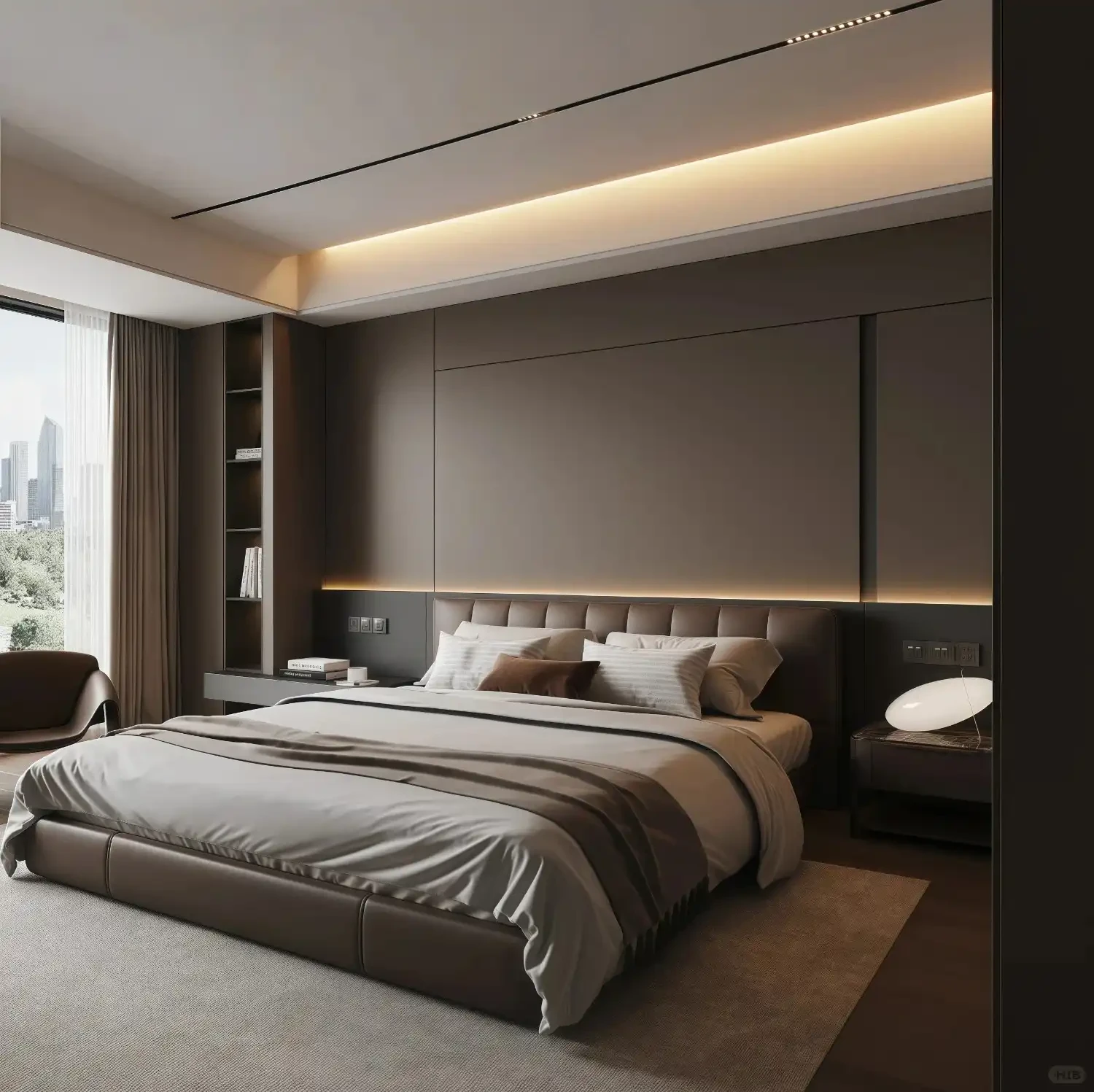
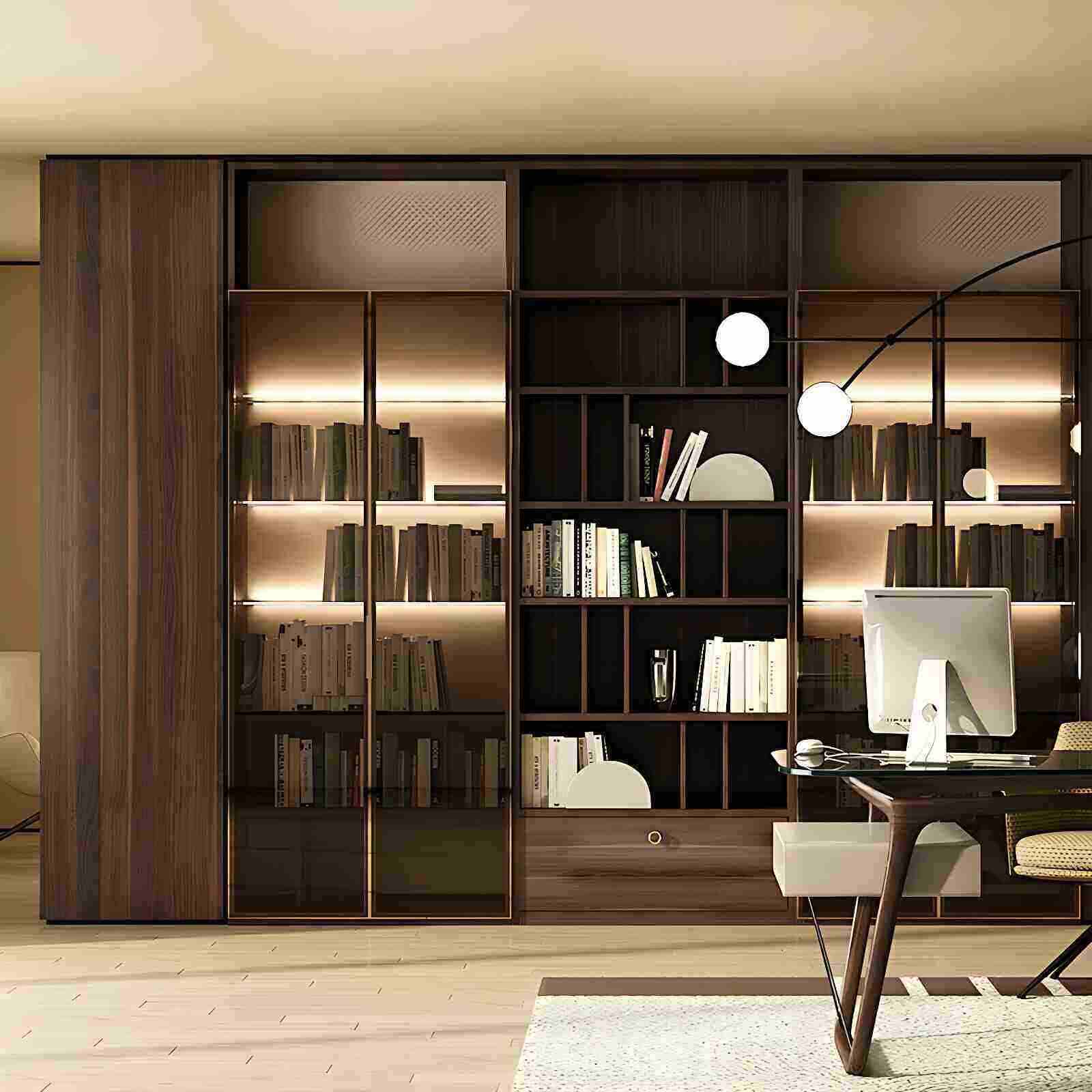

In home decoration, wood-based panels are one of the main sources of formaldehyde.
Everyone knows that formaldehyde is harmful and that you should buy environmentally friendly materials with low formaldehyde content. As a result, many students refuse to buy anything that is not E0 grade boards, believing that boards that meet the E0 grade standard must be environmentally friendly.
But is that really the case?
Before answering this question, let's first look at how formaldehyde content is measured. There are three methods for testing the formaldehyde content/emission of wood-based panels:
1. Perforation extraction method
Drill a hole in the board to take a sample, and then test the formaldehyde content of the sample.
Unit of measurement: mg/100g
Applicable to: various medium-density fiberboard, high-density fiberboard, particleboard, oriented strand board, etc.
2. Dryer method
Place the board in a sealed desiccator, dissolve the formaldehyde it releases within 24 hours in a certain amount of absorbent liquid, and then measure the ratio.
Unit of measurement: mg/L
Applicable materials: Plywood, decorative veneer plywood, blockboard, etc.
3. Climate chamber method
A 1㎡ panel was placed in a 1 cubic meter climate chamber. The air inside the chamber was continuously circulated and filtered through a solution. The formaldehyde content in the solution was then measured.
Unit of measurement: mg/m3
Applicable to: Impregnated paper laminate wood flooring, engineered wood flooring, bamboo flooring, impregnated paper veneer engineered wood panels, etc.
Tip: The units of measurement for the three testing methods above are different. You can determine the testing method by checking the units of measurement of the test results.
So, what standards must be met for each of these three methods to test the formaldehyde content of E0 grade boards to be considered合格 (qualified/compliant)?
Borehole extraction method: ≤4mg/100g
Desiccator method: ≤0.5mg/L
Climate chamber method: ≤0.12mg/m3
Here we will focus on the climate chamber method.
Why?
Because China uses the 1 cubic meter climate chamber method as the arbitration testing method for formaldehyde emission from wood-based panels.
What does this mean?
It means that if you find excessive formaldehyde levels in your home after renovation and suspect the wood-based panels are the cause, and you want to sue the seller, the final determination of whether the panels exceed formaldehyde limits will be made using the climate chamber method.
The climate chamber method has a series of strict prerequisites:
1. Place a 1-meter long and 50-centimeter wide board into a 1-cubic-meter climate chamber. The board should cover 0.5 square meters on each side, totaling 1 square meter.
2. The temperature inside the climate chamber should be between 22.5 and 23.5℃. It must not exceed 23.5℃.
3. The humidity inside the chamber should be between 42% and 48%, and must not exceed 48%. (Humidity in Changsha often exceeds 60%, and can even reach 70-80% during rainy weather.)
4. The air exchange rate inside the chamber should be between 0.95 and 1.05, meaning approximately one air exchange per hour. (Note: When you have your air conditioner on and the doors and windows closed, it's impossible to achieve one air exchange per hour in your entire house unless you have a fresh air system.)
5. The air velocity over the sample surface should be 0.1-0.3 meters per second, meaning there should be a gentle breeze of about level 1.
If the above conditions are met, continuous testing for 10-28 days is conducted. If the formaldehyde emission level is below 0.12 mg/m3, it can be called an E0 grade board.
Sounds pretty good, right? The testing is very rigorous, isn't it?
So I can rest assured that I can buy qualified E0 grade boards from reputable manufacturers?
Completely wrong!
These boards aren't used in labs; they're brought to your home. Can you guarantee your home will maintain those testing conditions 24/7, 365 days a year?
Can your home temperature always be below 23.5℃?
Can your home humidity always be below 48%? Can
your home have its entire air exchanged every hour? (Those with fresh air systems can rejoice; you might be able to do that.)
If any one of these conditions isn't met, then boards that test as meeting formaldehyde emission standards could actually exceed them in your home! This is
because formaldehyde release accelerates in high temperature and humidity!
What constitutes high temperature? Temperature above 23.5℃!
What constitutes humidity? Humidity above 48%!
Boards that pass testing will fail to meet formaldehyde emission standards in your high-temperature and humid environment! You'll have nowhere to complain! Because China uses the 1m³ climate chamber method as the arbitration testing method for formaldehyde emission from boards! You say your boards have excessive formaldehyde, but after testing, placed in a non-high-temperature and non-humid environment of 23.5℃ and 48% humidity, they actually don't exceed the standard!
Some wealthy folks might say, "My family has plenty of money! We can keep the temperature below 23.5℃ with the air conditioning on 24/7 in the summer, even the kitchen has it running 24/7" (I'm seriously impressed!). Because of the air conditioning, the humidity isn't high either; and I have a fresh air system that changes the air every hour!
Oh, my friend, take a closer look at the first testing condition-note that only 0.5 square meters of board material is allowed per cubic meter of air!
Can you really control the amount of board material used in your home to that low?
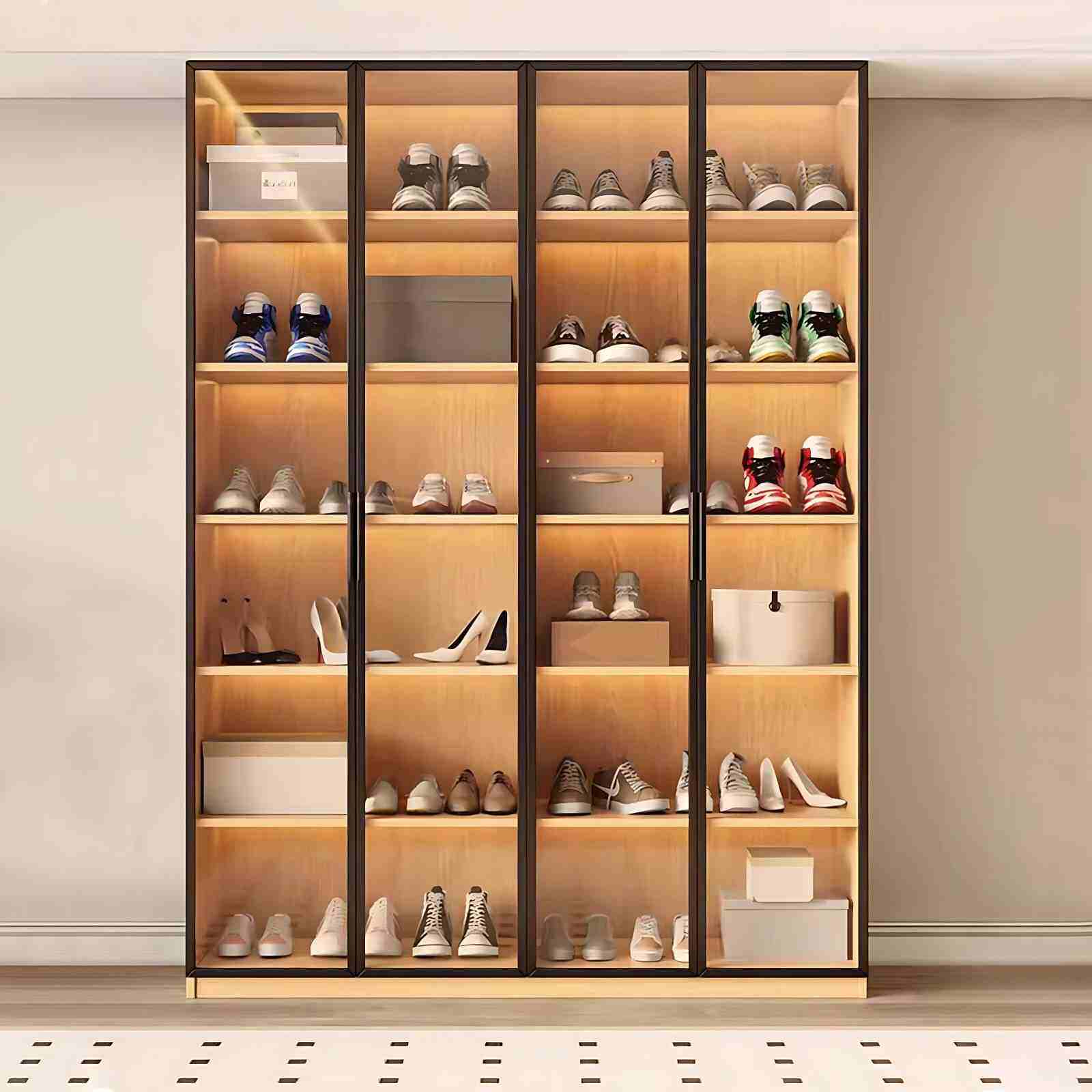
Let's take a shoe cabinet as an example and calculate:
The shoe cabinet shown in the picture is 1m long, 1m high, and 0.35m deep. It occupies an air volume of 1m * 1m * 0.35m = 0.35m³.
How many square meters of board material were used in total?
A. Back panel: 1m * 1m = 1㎡
B. Door panels: 0.82m * 0.5m * 2 pieces = 0.82㎡
C. Long horizontal shelves: 1m * 0.35m * 5 pieces = 1.75㎡
D. Short horizontal shelves: 0.5m * 0.35m * 1 piece = 0.175㎡
E. Long vertical shelves on both sides: 1m * 0.35m * 2 pieces = 0.7㎡
F. Middle vertical shelf: 0.82m * 0.35m * 1 piece = 0.287㎡
In 0.35m³ of air, a total of 4.732㎡ of board material was used, which is equivalent to 13.5㎡ of board material per cubic meter of air.
And this 13.5㎡ is only one side; the test is calculated based on both sides!
That means a small shoe cabinet is equivalent to 27㎡ of board per cubic meter of air! That's 27 times higher than the testing environment!
If a qualified board releases 0.12mg of formaldehyde per square meter of air, then a shoe cabinet made from such a board would release 0.12mg * 27 = 3.24mg of formaldehyde!
Because its density in your home exceeds 27 times that of the testing environment!
Of course, this is just a simplified calculation; in reality, your home won't be completely filled with cabinets. Perhaps you have an entryway that's 2m long * 1.2m wide * 2.7m high, and only one shoe cabinet in it. In that case, you've used 27㎡ of board in a space of 2 * 1.2 * 2.7 = 6.48m³.
Even that... still exceeds the 1㎡/1m³ ratio of the testing environment!
I have no doubt that many qualified boards on the market meet national standards for formaldehyde release. My suspicion isn't about the formaldehyde emission from the boards not meeting standards; it's that my own home doesn't meet the environmental standards for formaldehyde testing!
I can't keep the temperature below 23.5℃ 24/7;
I can't keep the air dry below 48% all the time (especially in the basement);
and I can't use only 1 square meter of boards per cubic meter of air.
Since I can't achieve that, I can only try to choose materials with even lower, lower, lower, lower formaldehyde content!
For example, using raw wood + wood wax oil:
For example, using other materials instead of boards:
Finally, here's a tip for removing formaldehyde.
We often say to let the house air out for a hot summer day before moving in, because formaldehyde release is accelerated in hot and humid environments. The high temperatures of the summer are a given, and summer humidity is much higher than winter (otherwise, why would we use moisturizer for dry skin in winter?). With the combination of high temperatures and humidity, the formaldehyde from the renovations is released quickly, making it much safer to move in afterward.
What if the renovation is finished after the dog days of summer have passed? There's a clever solution-artificially create a dog days of summer!
Place a large basin of water in each room (if possible, also place a humidifier in each room and refill the water regularly). Then close the doors and windows, and turn on the underfloor heating, air conditioning, or a small heater. Don't worry about the electricity and gas bills; they're nothing compared to your and your family's health.
After 10-30 days, open the doors and windows again to expel the formaldehyde that has been released more quickly. Keeping the doors and windows open for a few days, especially on windy days, will help dissipate most of the formaldehyde.