
 USD
USD GBP
GBP
 EUR
EUR
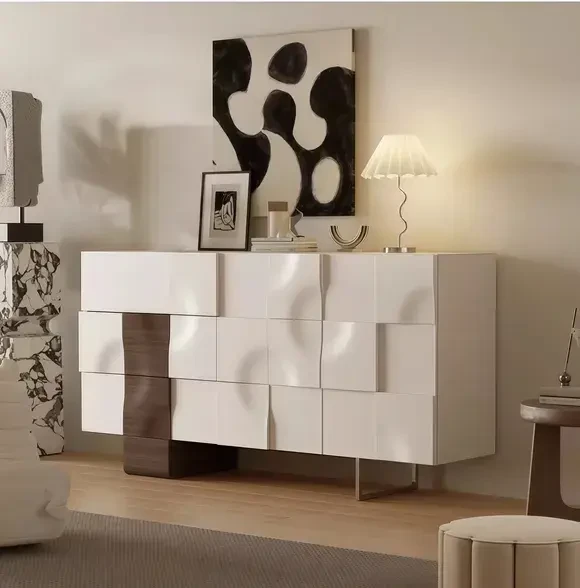
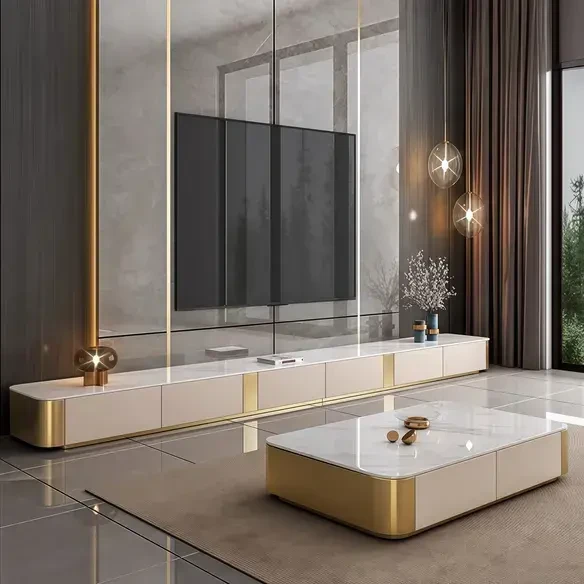
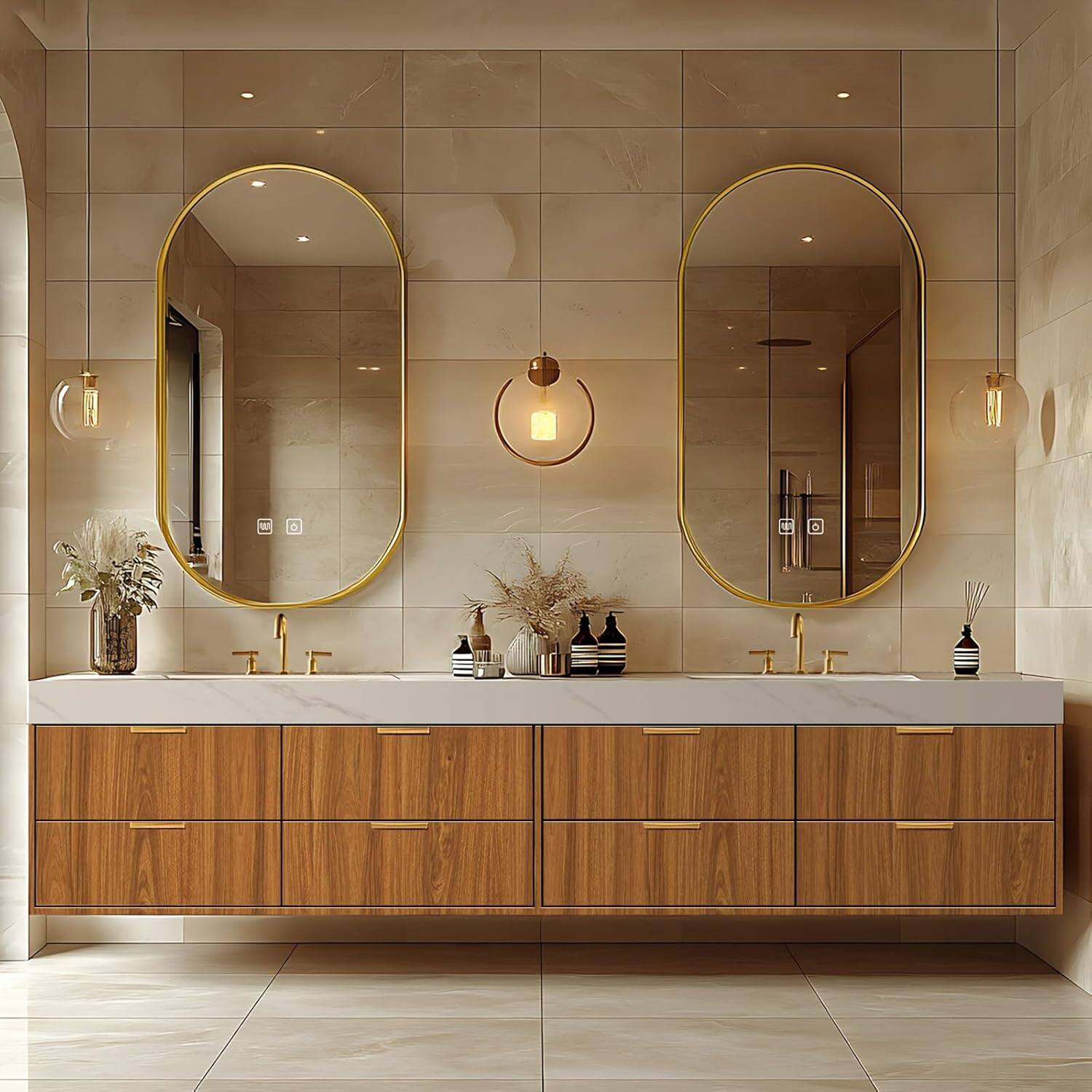
When it comes to home renovation, the first thing that gives many people a headache is the choice of building materials.
Engineered wood panels were originally very good and excellent; since their introduction, they have been an upgraded version that is superior to solid wood in terms of performance.
There are many types of engineered wood panels, and different panels have different applications. They are indispensable in decoration. Let's first organize the classification of engineered wood panels and their common names using a mind map.
[Edited and self-made]
Given that some experienced carpenters, master craftsmen, and even decoration and design companies have multiple names for the same type of board, and that some of these terms reflect the characteristics of different eras and have evolved with the rapid development of industrial production, this article provides a simple overview.
I. Plywood
The most common types are solid wood plywood and multi-layer solid wood plywood.
Plywood has excellent strength and flexibility, but it comes in two types: softwood and hardwood.
Cork plywood is commonly used for roofing and flooring, while hardwood plywood is stronger and suitable for wall structures and furniture.
Plywood is a higher-strength board material with better fire resistance and moisture resistance. It is the most likely material to be used for any load-bearing, flexible, or bending applications, making it a mainstay. It also has excellent water resistance, making it ideal for bathroom cabinets and suitable for humid southern regions.
Construction projects, high-end residential building renovation projects, and high-end furniture manufacturing projects.
The veneer plywood is made of hardwood, using high-quality logs imported from Western Europe, Africa, and Latin America.
II. Fiberboard
Next comes what many people used to call the "scraps" stage-let's start with a broader concept: fiberboard.
Modern fiberboard, also known as MDF, is made with advanced technology, and the most common type is medium-density fiberboard (MDF). MDF is the most frequently used board in home decoration. It is a semi-finished product, flat, smooth, and with uniform density, making it suitable for secondary processing.
Fiberboard is a board made with fiber as the base material, commonly wood chips. Synthetic resins or other adhesives are added to the wood chips and then bonded together under heat and pressure.
Different pressing processes result in different densities, leading to high, medium, and low density boards-hence the term "MDF" (medium-density fiberboard). It can be used for various decorative veneers, enriching its colors and patterns; it can also be carved and grooved to create shapes, including European, American, and classical lines.
MDF (Medium-density fiberboard) is very easy to shape; even the rounded edges can be molded out. It's also easy to cut and is commonly used in musical instruments, such as guitars and speaker enclosures. Therefore, MDF is best suited for making facades, such as cabinet doors.
III. Particleboard
Particleboard was formerly known as chipboard, but now the mainstream is solid wood particleboard, and the rising star in the market is OSB.
Particleboard is an honest and straightforward name, originating in Germany. During World War II, the Germans mixed waste wood flooring, paper scraps, and glue together to produce particleboard, which was then widely used.
At that time, a classic configuration was formed: birch, beech, pine and spruce were processed into shavings as the outer layer, with coarse fiber core in the middle, called three-layer particleboard.
Later, particleboard was developed into chipboard, which has a cross-layered structure of particles inside. Its properties are basically the same in all directions, and it has better lateral load-bearing capacity.
Its surface is very smooth and its density is uniform, making it easy to make various finishes. For example, the high-end furniture board with particleboard as the core material launched this year uses decorative paper from Schattdecor in Germany as the finish. It has electrostatic ink absorption, good stability, and can be made into a single board. It is resistant to deformation and cracking, making it both an all-rounder and a performance king.
Particleboard is used for decorative finishes and is an all-around versatile material. It boasts excellent load-bearing capacity, and the decorative veneer ensures visual appeal while providing superior moisture resistance. It can be used for cabinet bodies and doors, featuring robust materials, exquisite craftsmanship, a wide variety of colors and patterns, and excellent performance, making it a popular choice for custom furniture.
It's worth mentioning that additives are added during the production of particleboard to enhance its performance. Therefore, truly high-quality particleboard is moisture-proof and waterproof, making it suitable for countertops, bathroom cabinets, and even the rainy season in southern China.
Particleboard OSB
OSB is an abbreviation for Oriented Strand Board.
It is made by flat, narrow shavings, oriented laying, and then hot pressing.
This orientation, like the "angle design" mentioned above, is a design closely related to mechanics. When designed properly, the wood grain structure is reorganized, and the stress, strength, and durability can be greatly improved.
OSB (Oriented Strand Board) has longitudinally arranged surface wood chips and a transversely arranged core layer. This overlapping and interlaced structure gives the finished product extremely high mechanical properties and dimensional stability. By applying decorative paper or engineered wood veneer to the surface of surface-finishable particleboard, the surface texture becomes clear and natural, while retaining the original mechanical properties, durability, moisture resistance, and dimensional stability of OSB. It also boasts advantages such as a low coefficient of expansion, minimal deformation, good stability, uniform material, and high screw strength.
OSB is very common in Japan and Europe. In the United States, OSB accounts for half of the total use of engineered wood products. OSB is currently poised to completely replace plywood.
IV. Blockboard
It's now mainly called plywood or blockboard, and generally refers to plywood. While plywood, simply put, is a board with a core made of large blocks of wood (not small wood chips), the process involves cutting wood into uniform squares, gluing them together, attaching single-layer veneers on top and bottom, and then pressing them together using hot and cold presses. However, there's still significant progress in core material and production technology.
It contains a single piece of wood, so it won't crumble or splinter when cut, and carpenters can cut it manually. Because it's commonly used in on-site furniture making, the name "plywood" became popular.
The plywood is made of high-quality southern fir, poplar, paulownia and other woods. The surface and bottom boards are made of Okoume veneer. It adopts an advanced production process of double sanding and double molding. The product has the characteristics of good flatness, small color difference, light weight and not easy to deform. It can be widely used in interior decoration and furniture making.
In this issue, we have sorted out engineered wood panels according to their base materials. In the next issue, we will introduce them by their surface finish.