
 USD
USD GBP
GBP
 EUR
EUR
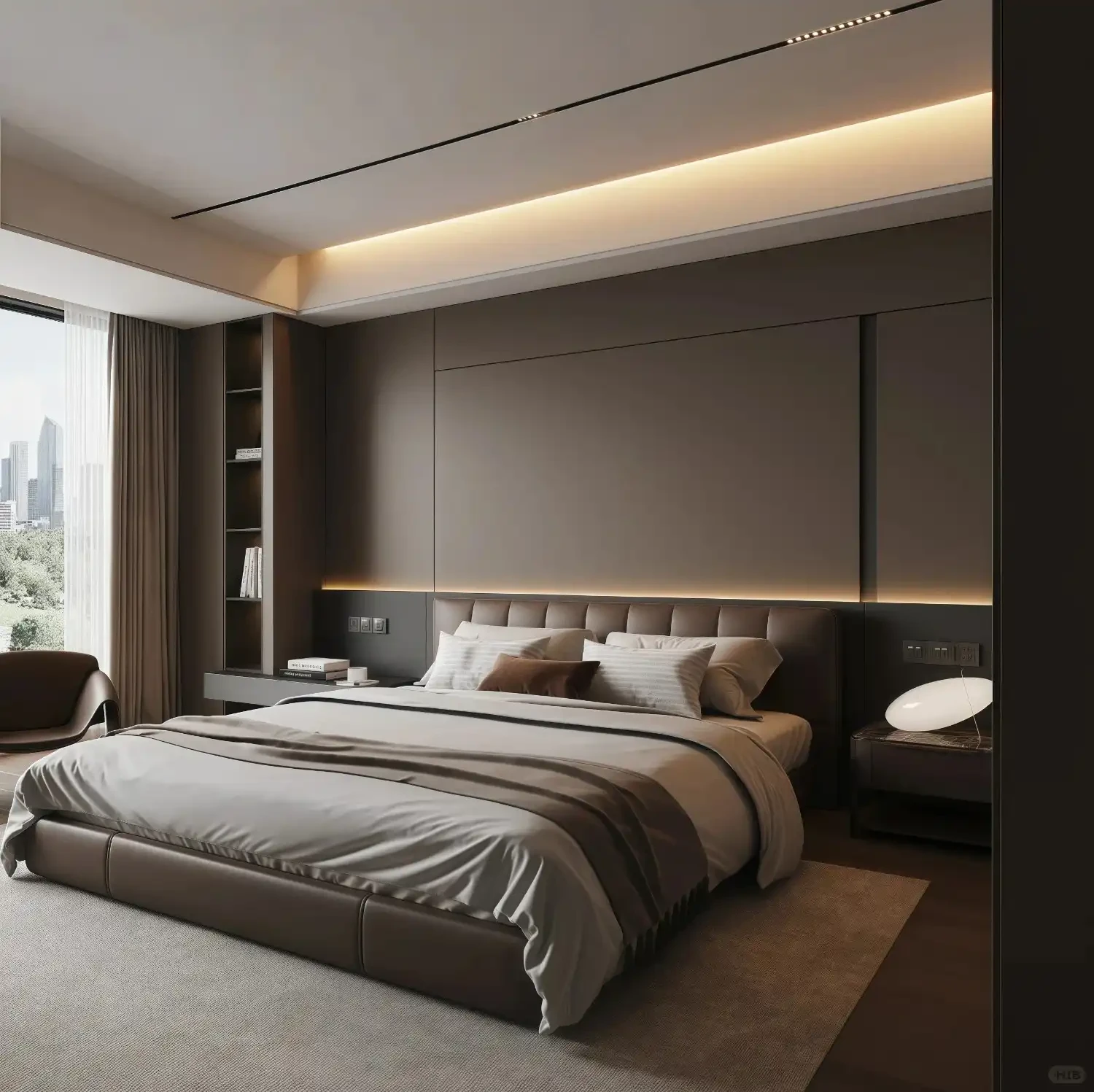

I recently encountered three cases of yellowing gypsum board. Based on my experience, yellowing of ceilings is mostly caused by improper installation. I have also written two articles summarizing and analyzing this before (Why do paper-faced gypsum board partitions and ceilings turn yellow? Why do paper-faced gypsum board partitions and ceilings turn yellow (Part 2)?).
Today I'd like to talk about how to properly understand the issue of yellowing plasterboard, hoping it will be helpful to everyone.
I. Reasons:
The putty powder we use in decoration is mainly composed of quicklime (CaO). When workers apply putty, especially when rushing to finish before it is completely dry, a hydrolysis reaction occurs: CaO + H2O = Ca(OH)2. This creates OH- ions on the putty surface, forming a weakly alkaline phase. Since latex paint contains anti-mildew agents, which contain a large amount of Fe2+ ions, these are oxidized by the air to Fe3+ ions, resulting in the reaction Fe3+OH- = Fe(OH)3↓.
Fe(OH)3 is a brown, flocculent colloidal precipitate. When it appears on the surface of putty, it causes a yellowing phenomenon. The pH value plays a crucial role in whether yellowing is likely to occur.
Therefore, it is recommended to wait until the putty and paint are completely dry before applying the second coat to prevent OH- ions from escaping. Additionally, since both latex paint and putty powder may contain bleaching agents, these can react with oxides in the hardener of the latex paint, easily resulting in yellow residue. Furthermore, latex paint has complex additives and can deteriorate during long-term storage, easily leading to yellowing. An excessively high pH value in the putty powder is a major contributing factor.
Since the yellowing substance Fe(OH)3 is produced by the reaction of the OH- ions of putty powder and Fe3 ions of latex paint, why does putty on the wall not turn yellow, but putty on the plasterboard does?
Because a wall is many times thicker than a gypsum board for the same surface area, its volume is many times larger. Therefore, when a painter applies paint evenly, the gypsum board has a higher moisture content than the wall surface, resulting in slower drying and the release of OH- ions in the putty powder. This creates the illusion that the surface dries quickly. Gypsum board absorbs water like a sponge, quickly drying the paint sprayed on its surface. If the paint is not thoroughly mixed with water, the solids will not completely dissolve and remain on the gypsum board surface, oxidizing and turning yellow in the air. This is similar to undissolved laundry detergent in water; after clothes absorb water, the residue remains on the surface, causing the clothes to yellow over time.
II. Prevention: Strictly follow the construction requirements during construction.
1) Before spraying wall paint, the plasterboard area should be treated with moisture protection, such as by spraying a moisture-proof primer or wallpaper primer. After it is completely dry, generally 2-3 days are needed before spraying wall paint (this takes a bit long, but it's worth it to avoid problems).
2) Apply the wall paint according to the instructions, which specify the dilution ratio and repainting interval. This must be strictly followed. Adding too much water or having too short an interval can cause a chemical reaction between the water and the plasterboard, leading to a change in its quality.
III. Solutions
1) Do not rush during construction to avoid color seepage due to the putty not being completely dry;
2) Purchase genuine brand paints from legitimate channels and of high quality;
3) Re-apply primer to the yellowed areas and then apply another coat of latex paint (coating).
On the one hand, alkali-resistant primer can increase the fullness of the topcoat film and improve the adhesion of the topcoat. On the other hand, it can effectively seal the alkalinity of water-resistant putty and prevent the topcoat from exhibiting alkali return or blooming.