
 USD
USD GBP
GBP
 EUR
EUR







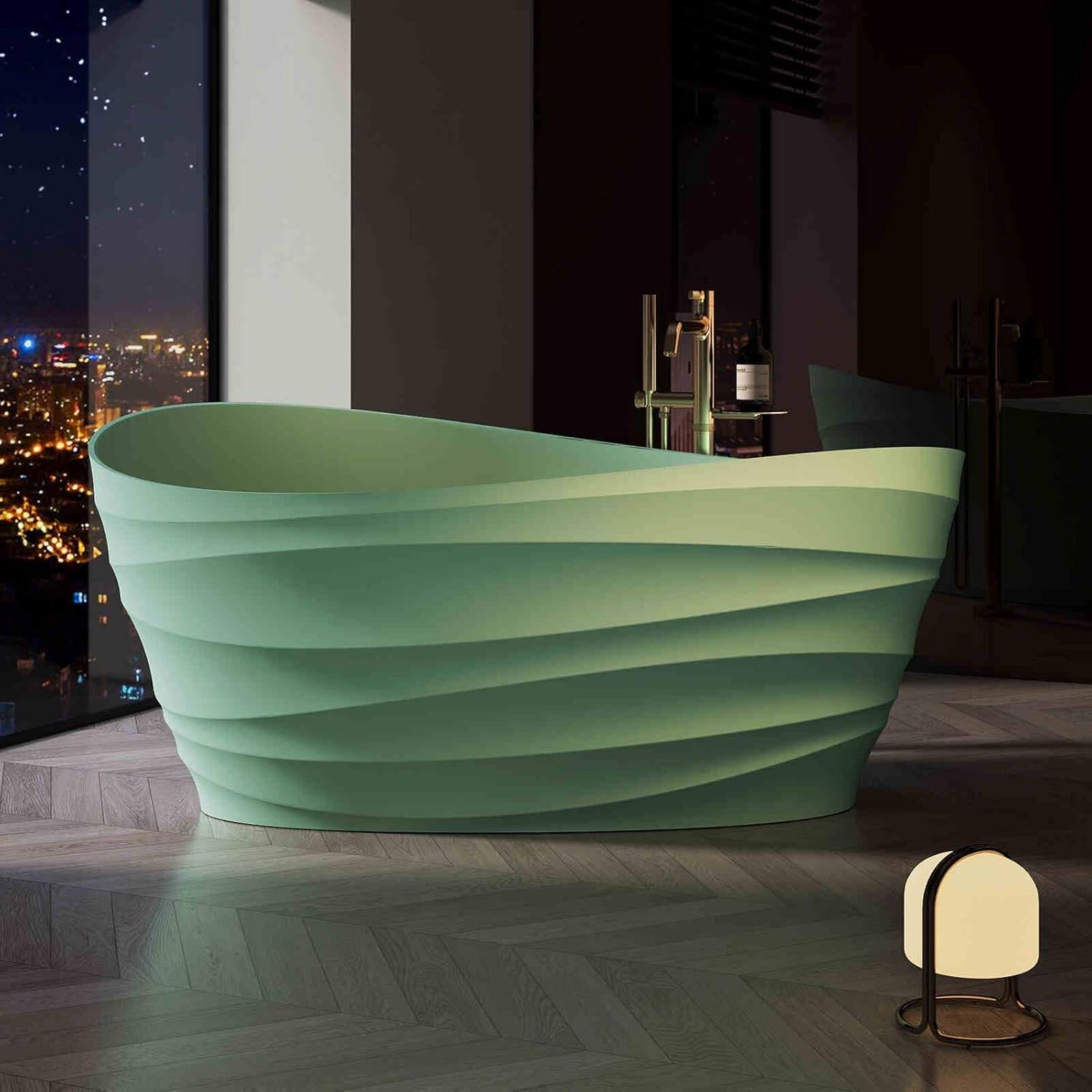






















Freestanding foot bathtubs attract attention with their classic elegance.
Before the widespread use of freestanding foot baths, people had long enjoyed bathing and invented bathtubs. Bathing is not a modern invention; people invented bathtubs and began enjoying bathing more than 3,000 years ago. Humanity has continuously explored and progressed in the question of "how to bathe and how to bathe comfortably," occasionally even regressing. Bathing is a habit that has existed since the dawn of humanity. However, the concept of a "bathroom" did not exist in early times, let alone a bathtub. Natural streams and rivers served as public bathing areas. Even after the advent of bathtubs, these public bathing areas remained popular. The first true bathtub can be traced back to the ancient Greek island of Crete around 1700 BC. The northern city of Knossos achieved a remarkably modern level of hygiene and comfort. With excellent heating and drainage systems, it was the first city in history to introduce bathtubs into daily life. The "ancestor" of the bathtub-a five-foot (approximately 1.52-meter) long tub made of hard clay-was unearthed at the Temple of Knossos.
During the Roman Empire, bathing became fashionable. Collective bathing was no longer confined to streams but took place in dedicated public bathhouses. Bathtubs at this time were more like soaking pools, quite large. Public bathhouses were spacious, and even private bathrooms were as large as a room. Bathrooms were lavishly decorated, and bathtubs were often made of marble. Bathing became a daily routine; people felt uncomfortable if they didn't take a bath every day. By the 19th century, with the development of plumbing systems and the introduction of running water, bathtubs had fixed locations for filling and emptying water, making them less portable and eventually confined to the bathroom. The most popular type of bathtub was the enclosed wooden tub-a metal tub encased in a wooden shell. People no longer needed to move the tub around or fill and empty basins. However, this convenience brought many problems, the biggest being corrosion and cleaning. Metal encased in wood rusted easily, and the seams between the metal and wood were difficult to clean. Therefore, people began researching different materials for bathtubs. Metal bathtubs not only have the disadvantage of being highly susceptible to corrosion and rust, but they are also prone to expansion and deformation when filled with hot water. It's incredibly frustrating to find the bathtub shell cracked just when you've filled it with hot water and are ready to enjoy a relaxing bath.
By the 1850s, British bathtub manufacturers had finally solved this problem, creating bathtubs made entirely of ceramic. Solid ceramic bathtubs had smooth, seamless surfaces and gently sloping edges, were rust-resistant, and easy to clean. They were desirable, and solid ceramic bathtubs became a symbol of social status; after all, their high price was unaffordable for ordinary people. Since they were a symbol of wealthy life, they decided to make them even better.
So, besides fulfilling daily cleaning needs, bathrooms gained more functions, such as spas. It truly meant you could have a spa treatment at home without leaving the house. With enhanced functionality, aesthetics had to keep pace. Therefore, to make the bathtub look more beautiful, four metal feet were added to the bottom, engraved with intricate patterns-thus, the freestanding claw-foot bathtub was born. Freestanding claw-foot bathtubs reached their peak in the late 19th century, originating in the mid-18th century. The claw-foot design originated in the Netherlands and spread to England, becoming popular among the aristocracy, much like bathing itself became increasingly fashionable. Early British bathtubs were often made of cast iron, or even tin and copper, with a paint finish that easily peeled off over time. The freestanding claw-foot bathtub's ornate and complex design, with its long, sloping backrest and exquisitely carved metal feet, made it even more luxurious, earning it the nickname "the Cadillac of bathtubs." Of course, it was still only affordable for the wealthy. However, not long after, the First World War broke out. The smoke of war made people forget about the ornate freestanding claw-foot bathtub; the metal feet were even dismantled and used to manufacture weapons, forcing people to develop new types of bathtubs. As time has passed, various styles of bathtubs have been invented, but the freestanding clawfoot bathtub remains a popular choice, proving its timeless appeal. A beautiful freestanding clawfoot bathtub can enhance the overall aesthetics of a bathroom. While prioritizing aesthetics, it's crucial to choose a high-quality, attractive freestanding clawfoot bathtub. We can start by considering the material, size, and color. Different bathtub materials not only differ in appearance but also in heat retention and durability. Currently, acrylic and ceramic bathtubs are commonly used by homeowners. Acrylic bathtubs are lightweight, easy to install, and due to their poor thermal conductivity, they offer relatively good heat retention. They are available in various sizes, colors, and shapes. Ceramic bathtubs, on the other hand, are more refined, sturdy, and stain-resistant, but they are heavier and more expensive. Regarding size, we can determine the size of the freestanding clawfoot bathtub based on the size of our bathroom, as well as our own height and build. The color can also be chosen to match the overall color scheme of our bathroom.
The installation of a freestanding footed bathtub mainly involves installing the bathtub legs. When installing the legs, place a soft material such as a blanket or cardboard box on the floor next to the bathtub to protect the edges from tipping over. First, install the two side legs, then place something underneath the middle legs that is not too hard or sharp to prevent scratching the bathtub. The mounting holes for the two bottom legs are suspended, making installation easy (be careful to hold the bathtub to prevent it from tipping over). Some models have letters on the mounting points of the bathtub legs that correspond to the back of the legs; simply tighten the screws. For models without these letters, install the higher legs on the side where you lie down and the lower legs on the side with the drain hole (two higher legs and two lower legs to prevent water accumulation). For models with the drain hole in the middle, all four legs are the same; simply try different positions to find the best fit. This is the installation method for a freestanding footed bathtub.
Installing a freestanding foot bathtub at home is truly a blessing for bath lovers. A proper bath is beneficial for relaxation and skin care, and public bathhouses are never entirely reassuring. So, if you really love bathing, consider installing a tub in your own bathroom. For those with health issues, such as those with excessive dampness in their body or frequent discomfort in their legs and back, a regular half-hour hot bath daily can be very beneficial. Freestanding foot bathtubs boast beautiful lines and an elegant design, which explains their enduring popularity. Especially noteworthy is that they typically don't require additional securing and can be moved to a new home like other furniture! Of course, there are other advantages as well:
1. Comfort
A freestanding foot bathtub is undoubtedly an item that brings happiness to life. After a busy day, you may feel exhausted, but if you have a bathtub, you can fill it with hot water, lie in it, close your eyes, and enjoy a moment of tranquility to relax your mind and body. Moreover, bathing can promote blood circulation throughout the body, making you feel warm and cozy. It can not only effectively loosen muscles and bones and relieve pain in the shoulders, neck, back, and waist, but also improve sleep quality.
2. Convenience
Secondly, freestanding foot bathtubs are very convenient for families with young children, as kids are often uncooperative during bath time, and there's always the risk of them catching a cold if they stay in the tub for too long. Having a bathtub makes all the difference.
Placing a few cute toys in the fish tank can attract children's attention and enhance the fun of bath time. Furthermore, the bathwater temperature won't drop significantly in a short period, so there's no need to worry about them catching a cold.
Having experienced the benefits of a freestanding foot bathtub, we also need to know how to maintain it and what to do if problems arise:
1. Bathtub maintenance should be frequent, ideally cleaned once a week.
When cleaning a freestanding bathtub with feet, use a sponge or soft cloth. Do not use coarse cloths or scouring pads, and do not use any cleaning agents containing abrasive particles. Use a warm, mild cleaning agent. After each use, thoroughly rinse the cast iron bathtub with clean water and dry it with a soft cloth. For stubborn stains, use a small amount of abrasive cleaner. Clean the non-slip bottom with a soft nylon brush. Do not use steel wool, wire brushes, or abrasive sponges.
II. Gentle treatment of stains, limescale, and mold on the surface of freestanding foot bathtubs.
You can use an old soft-bristled toothbrush dipped in bleach to scrub the surface, which can remove stains and eliminate mold. For stubborn stains, you can also use half a lemon dipped in salt to scrub, or use a soft-bristled toothbrush with whitening toothpaste to scrub. For limescale, regular toilet cleaning products work well. For mold and bacteria that cause fungal infections, rinse with bleach or peroxide and then dry immediately.
3. Do not move the bathtub yourself; repair any damage promptly.
Do not move the bathtub after installation. If relocation is necessary, please contact a professional. Do not strike or hit the surface with hard objects, as this may cause dents or scratches. To repair dull or scratched areas, use a clean cloth mixed with a colorless self-polishing solution to vigorously wipe the surface, then apply a layer of colorless protective wax.
IV. Promptly address bathtub drain blockages and perform regular disinfection.
Pipes should be cleaned once or twice a week to eliminate odors and prevent bacterial growth. You can use a specialized drain cleaner; pour it into the drain and flush after five minutes.