
 USD
USD GBP
GBP
 EUR
EUR


















Are acrylic bathtubs any good?
Acrylic is the best new material for manufacturing sanitary ware after ceramics. As a special type of plexiglass, acrylic can also be used in aircraft windshields and can be used for decades in harsh environments.
Compared to traditional ceramic materials, acrylic, besides its unparalleled high gloss, offers the following advantages: good toughness and resistance to breakage; strong repairability-simply wipe the fixtures clean with a soft foam and toothpaste; a soft texture, without the icy feel of winter; and vibrant colors to satisfy diverse tastes. Acrylic basins, bathtubs, and toilets are not only aesthetically pleasing and durable but also environmentally friendly, with radiation levels comparable to those of human bones. Acrylic sanitary ware originated in the United States and now accounts for over 70% of the international market. In my country, Sichuan Dongfang Sanitary Ware Factory was the first to introduce this technology from abroad and apply for patents domestically. Now, Chinese acrylic sanitary ware brands are increasingly favored by consumers.
Due to the high difficulty and cost of acrylic production, many low-quality and inexpensive substitutes exist on the market. These substitutes, also called "acrylic," are actually ordinary organic sheets or composite sheets (also known as sandwich panels). Ordinary organic sheets are made by casting ordinary organic glass cracking material with pigments; they have low surface hardness, are prone to fading, and have poor polishing results after fine sanding. Composite sheets consist of only a thin layer of acrylic on the surface, with ABS plastic in the middle; they are prone to delamination due to thermal expansion and contraction during use. Genuine and fake acrylic can be distinguished by subtle color differences in the cross-section of the sheet and the polishing effect.
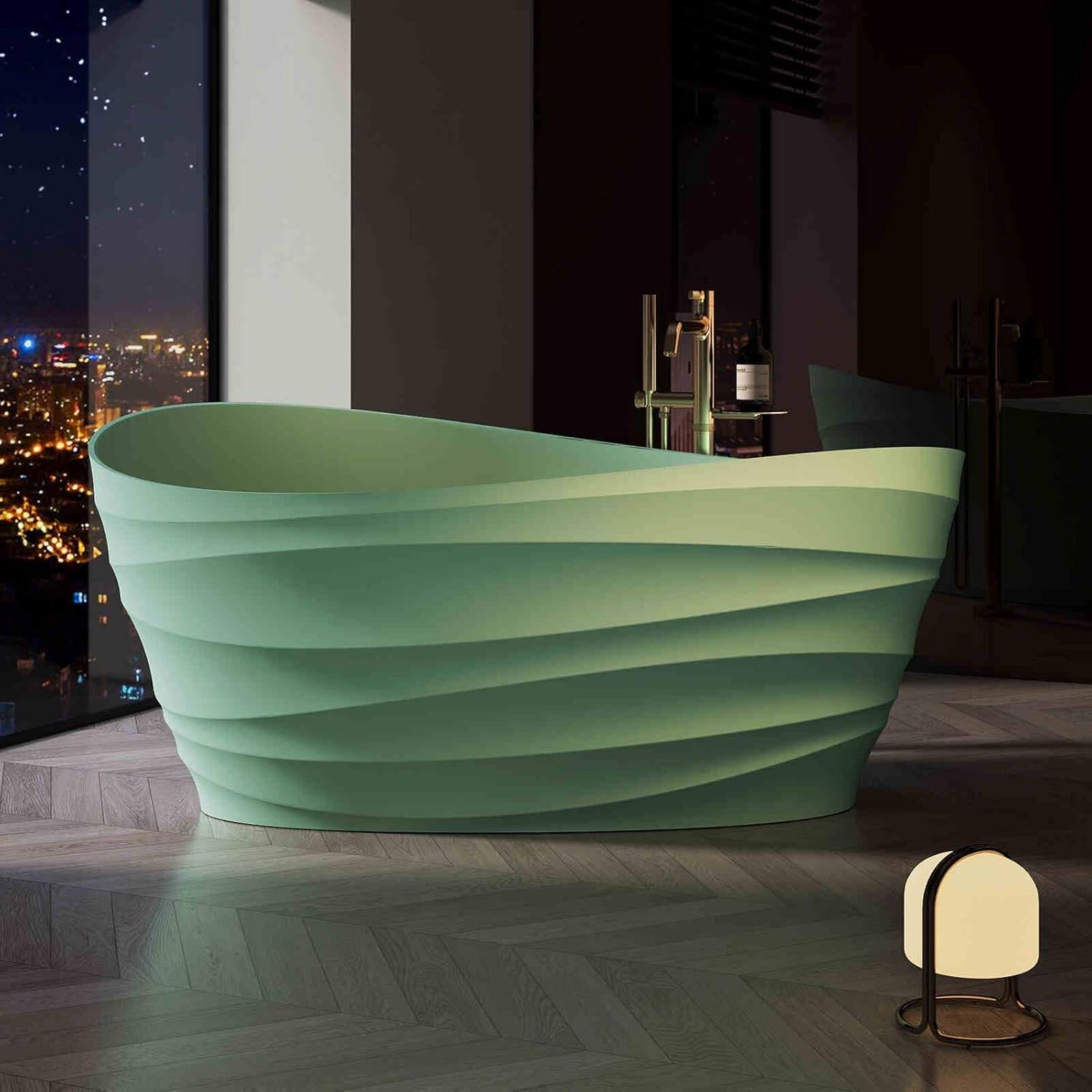
Bathtubs come in many varieties, including cast iron bathtubs, enamel bathtubs, and acrylic bathtubs. Let's compare enamel bathtubs and acrylic bathtubs. Enamel bathtubs are made from fired clay, resulting in a beautiful glaze. However, their disadvantages are also obvious: they are bulky and difficult to transport, susceptible to damage from bumps and jostles. They are also slippery, making them easy to slip on, and scratches and dents are irreparable. Acrylic bathtubs, on the other hand, are easy to mold, have good heat retention, a glossy finish, are lightweight, easy to install, and come in a variety of shapes and colors. Combining these advantages, acrylic bathtubs are relatively inexpensive.
Acrylic bathtubs also have many advantages. Acrylic bathtubs conduct heat slowly, thus providing excellent insulation. Even in cold winters, we won't feel cold when our skin is in direct contact with an acrylic bathtub. Therefore, acrylic bathtubs are a perfect choice for making luxury bathtubs.
Acrylic is a byproduct extracted from deep-sea oil. Using this material to make bathtubs results in a much lower raw material cost compared to cast iron and steel bathtubs. Moreover, acrylic bathtubs offer excellent performance and are highly competitive in the market.
Acrylic bathtubs possess a degree of self-healing property; if the surface of an acrylic bathtub is scratched, the bathtub itself will have a certain degree of self-repair capability. Furthermore, the surface of an acrylic bathtub is smooth and white, making it relatively easy to clean.