
 USD
USD GBP
GBP
 EUR
EUR

3 Efficient Ways to Customize Sectional Wardrobes
Aug 05, 2025


Freestanding Dressing Room Design Overview
Have you ever dreamed of having your dedicated dressing room? Dressing rooms come in a variety of designs, including open-plan, freestanding, walk-in, and built-in. Here, we'll focus on freestanding dressing rooms and delve into their layout, functionality, and size considerations.
Space Layout
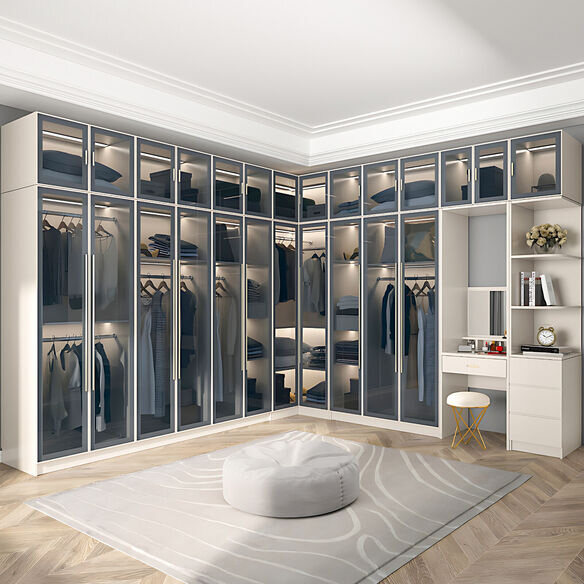
The interior layout of a freestanding dressing room varies depending on the spatial configuration. A U-shaped layout is often used for square spaces; a parallel layout is more suitable for narrow, long spaces; and an L-shaped layout is ideal for wide, long spaces. When choosing a layout, consider the actual shape of the space to determine the most suitable layout.
U-Shaped Layout
A U-shaped layout is a common choice for square freestanding dressing rooms. This layout makes full use of the space and maximizes the storage function of the dressing room.
L-Shaped Layout
An L-shaped layout is also a practical choice for dressing room design. It cleverly utilizes space, providing ample storage space for clothing and accessories while maintaining a flowing and aesthetically pleasing appearance.
The Importance of Functional Zoning
In closet design, it's crucial to rationally divide functional areas. To ensure comfortable dressing, the space should be carefully divided into dedicated storage areas—stacked, miscellaneous, large, and hanging. This layout not only facilitates storage and organization but also ensures efficient use of space, improving overall efficiency. Below, we'll delve into several key points for closet organization:
① Classification is essential! This is the first crucial step in creating an organized closet.
② Make full use of hooks and hanging baskets! Avoid haphazardly piling clothes on beds or stools, which compromises both aesthetics and practicality.
③ Practice the principle of "De-cluttering" (Datsu-shō-ri)! Decisively discard or give away items that haven't been worn or appreciated for a long time.
④ Maintain appropriate space! Avoid overcrowding your closet; leaving some space creates a more comfortable living environment.
⑤ Even the lazy ones should remember to organize regularly! A closet won't become tidy on its own; it requires maintenance.
Specific Functional Area Design
Stacking Area Design
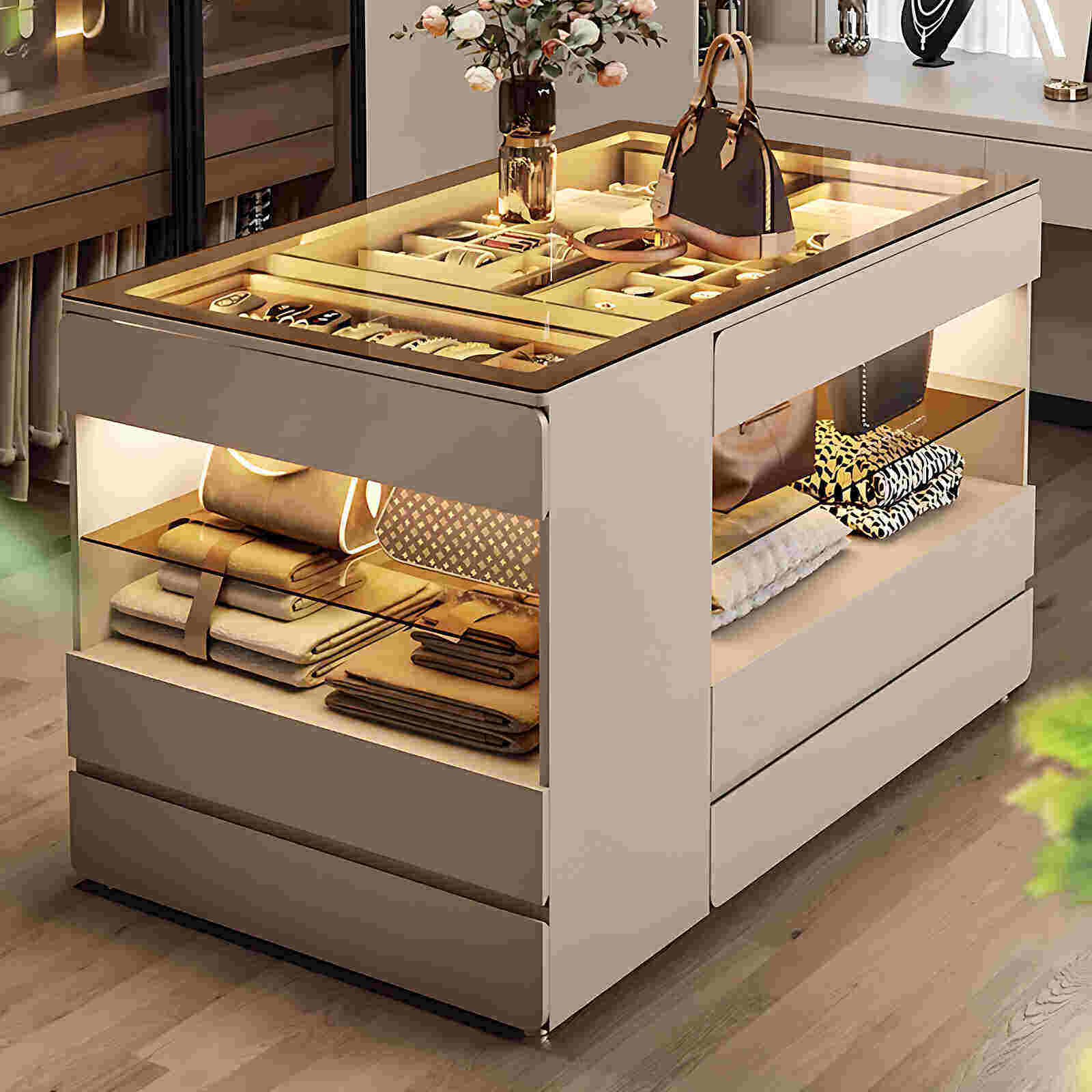
Ordinary drawers are the foundation of stacking area design. They're ideal for storing specialized garments, such as bias-cut tops, hand-beaded garments, and knitted sweaters. These garments are best stored folded, with as few creases as possible to preserve their original beauty.
If you're concerned about wrinkles when folding your garments, here's a tip: insert tissue paper or place a roll of paper in the creases before folding. This effectively prevents wrinkles and keeps your closet neat and organized.
Using Liners and Pullout Baskets
Organizing items in sliding liner with rails not only makes it easier to find what you need when you're putting things together, but also ensures everything stays organized. Furthermore, for even greater storage capacity, pullout baskets with rails are a great option. They're particularly suitable for wrinkle-resistant garments, such as pure wool, and their enclosed design effectively prevents mold and insect infestation.
The rotating pull-out basket design makes hanging and unloading clothes extremely convenient. Its unique rotation allows even the innermost garments to be easily visible, and it holds three times more clothes than a traditional hanger. Furthermore, the basket features flexible dividers for precise division according to personal needs, allowing accessories to be neatly organized.
Miscellaneous Area Design
Dirty Clothes Storage Basket: This specially designed dirty clothes storage basket effectively separates laundry from clean clothes, making it easy to store dirty clothes.
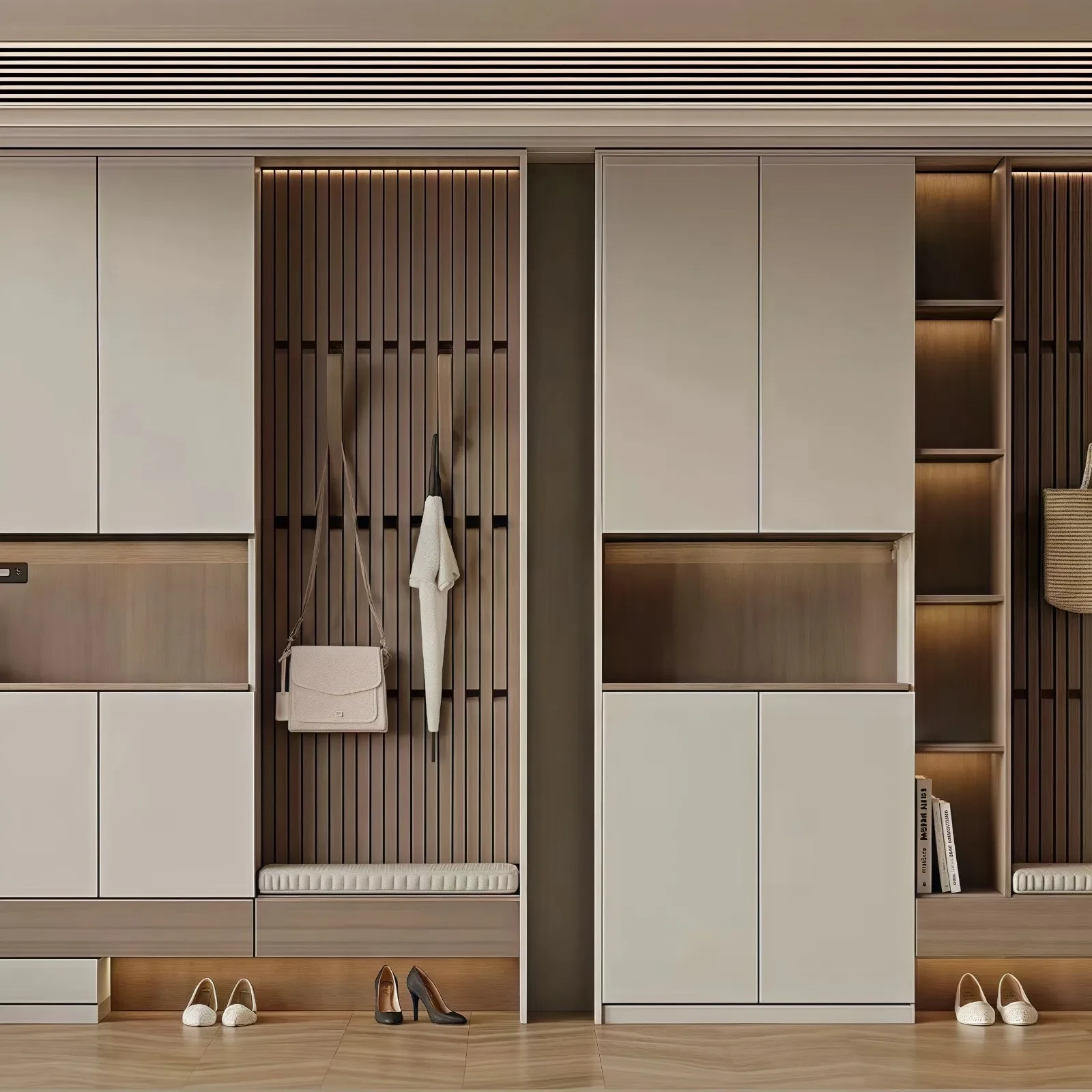
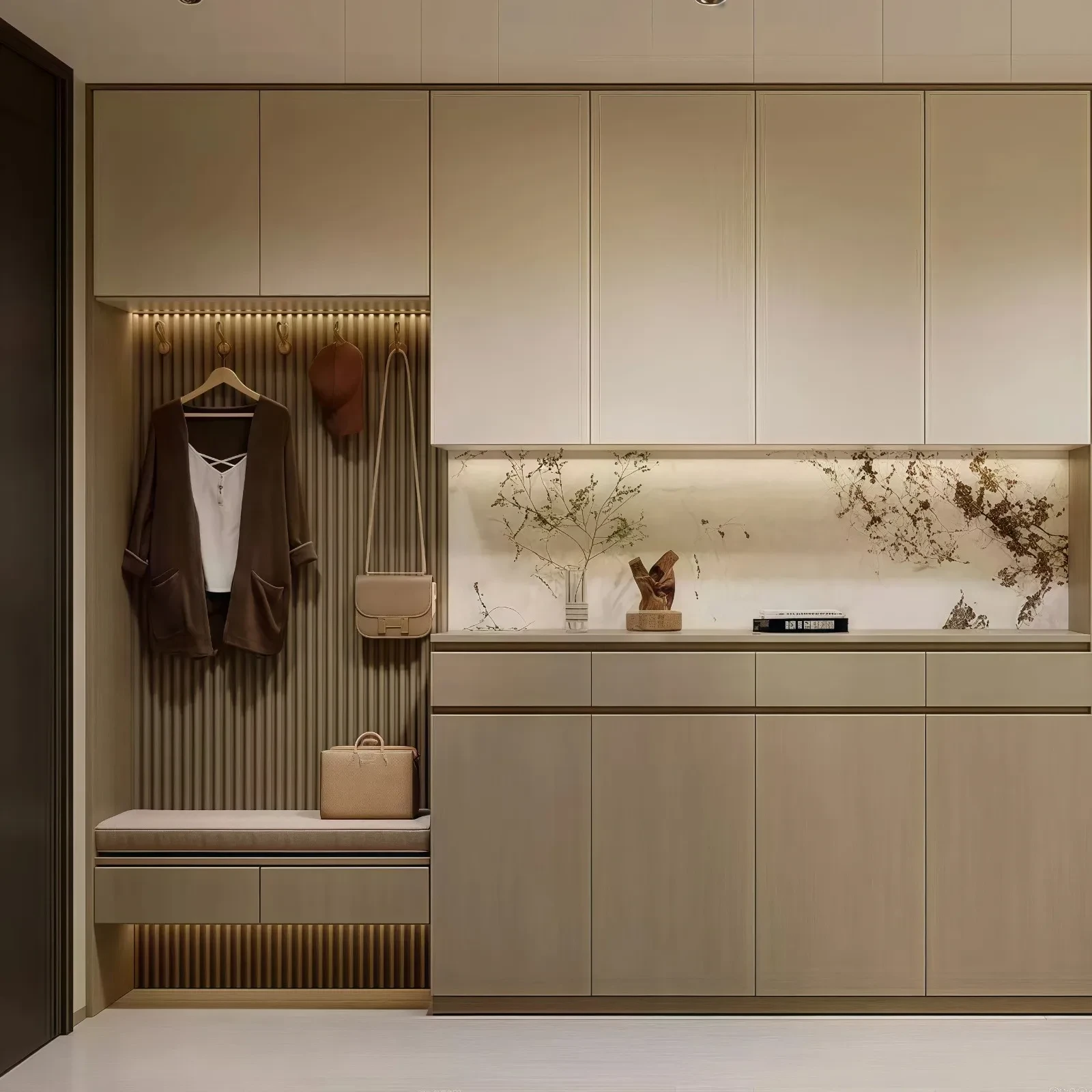
Side-pull shoe rack: To maximize space utilization, we've designed a side-pull shoe rack. Given the high value of leather shoes, we emphasize the importance of proper care. Before placing shoes, be sure to clean the soles and use shoe trees or paper balls to support them to ensure they maintain their original shape and prolong their life.
Small Item Storage: For small, everyday items, we offer linen storage baskets and attractive paper boxes for neat storage.
Compartmented Drawer Design: Silk pajamas, due to their material properties, are often difficult to store neatly. Furthermore, women's underwear also needs to be free from compression. Therefore, we've developed specially designed drawers for lingerie, offering a flat-lay storage system that effectively addresses this issue.
Large Item Area Design
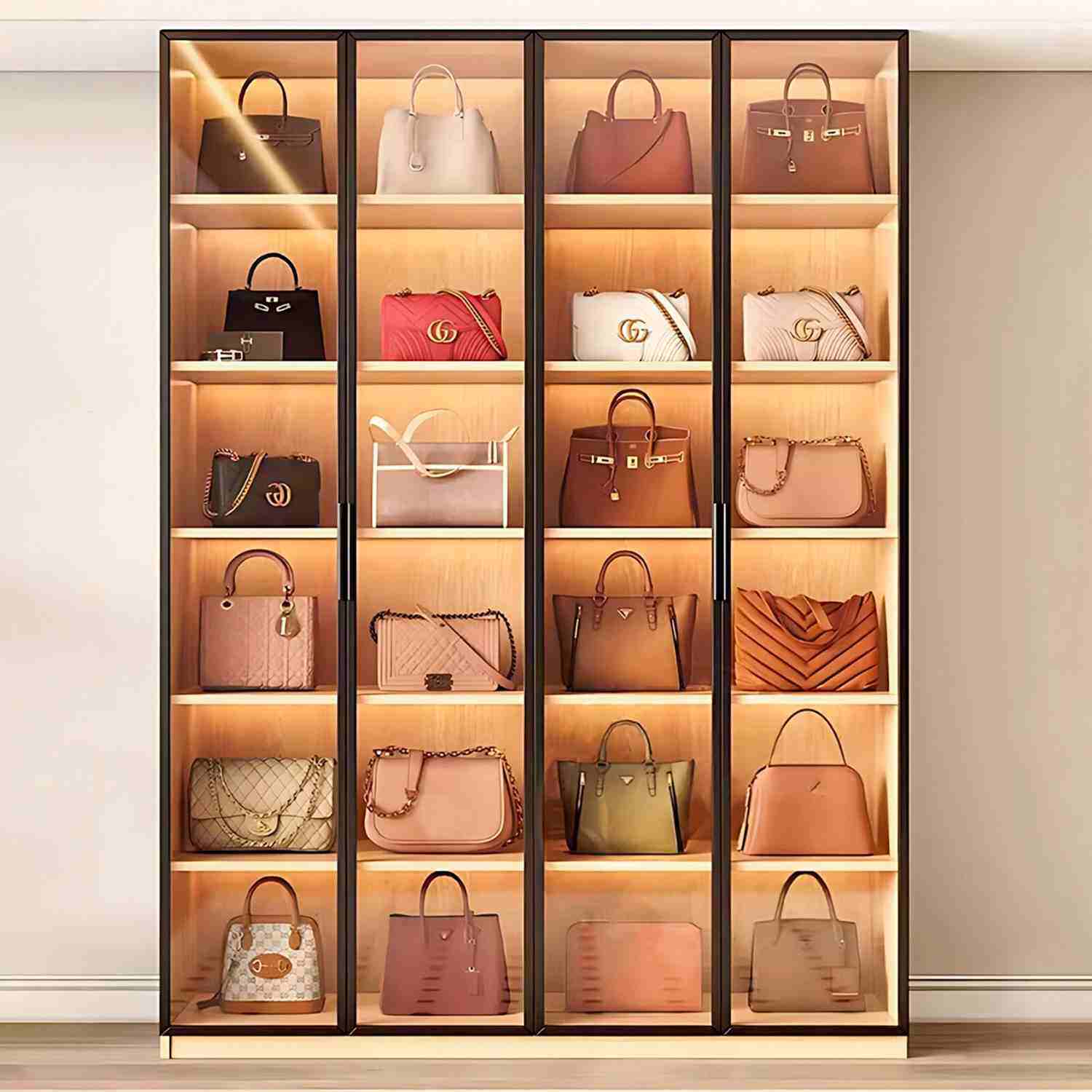
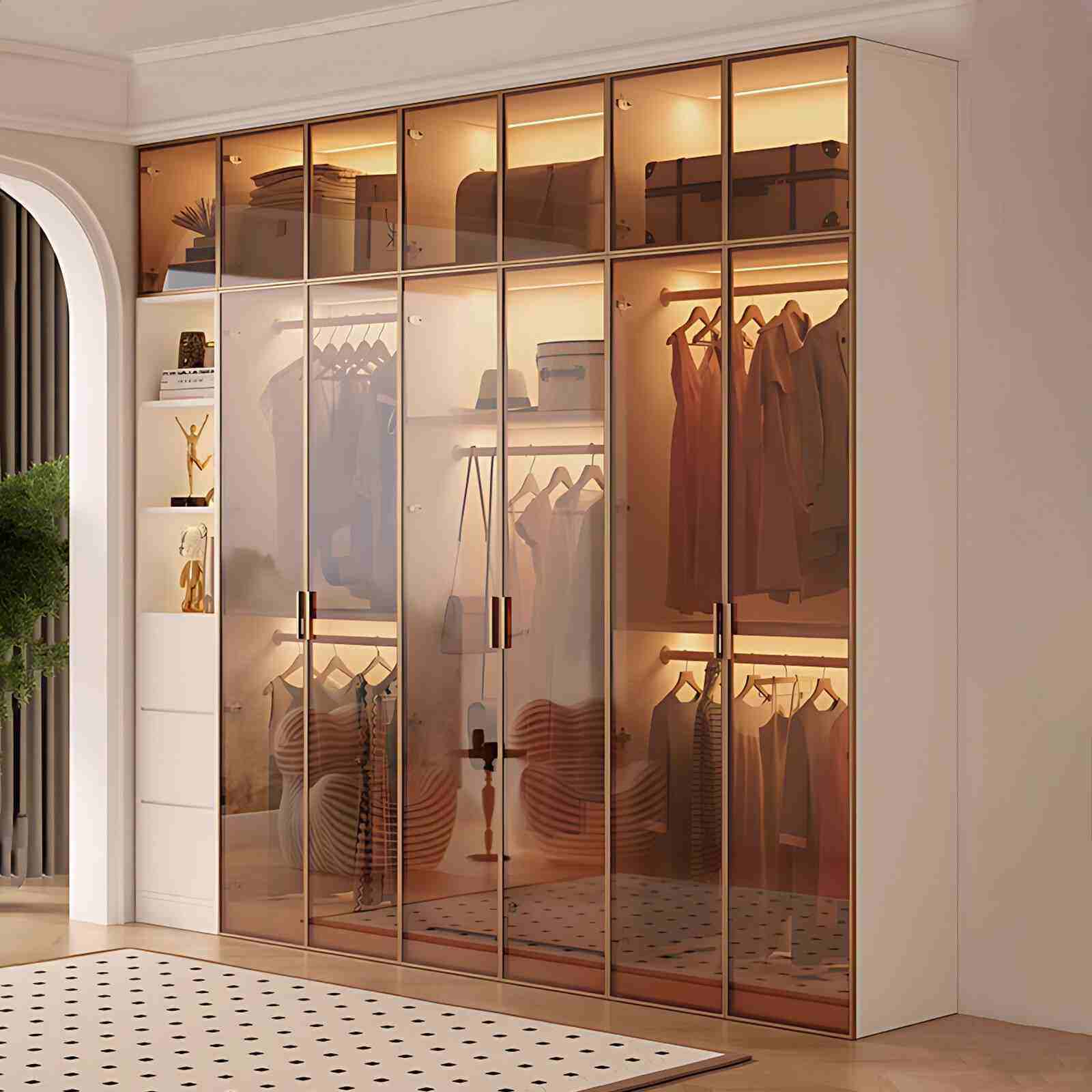
Large item areas are primarily compartmentalized, with stacking areas defined by grids. In a closet, an open compartment design is ideal for storing items such as bedding, luggage, pillows, and cushions. In particular, the spacious upper portion of the closet can be reserved for stacking large items such as bedding, blankets, cushions, sofa covers, and curtains.
Hanging Area Design
Another highlight of the closet is the metal hanging rail, which features a sliding track. These rails are designed with a damping and silent design, ensuring smooth and silent operation. More importantly, they prevent scratches on clothing. This design is ideal for hanging high-end accessories such as scarves and ties.
The trouser hanger is also meticulously designed. It's located within the rotating clothes basket and features a non-slip finish, ensuring pants stay secure and stable during push-and-pull movements. Furthermore, the thickness of the hanging rod is carefully calculated, ensuring that even with extended use, there's no worry of smudges on pants, ensuring they remain in pristine condition.
Recommendations for using a standard clothes rail: Ensure ample space in the closet's hanging area so that each piece of clothing is properly spaced and avoids crowding.
Tips and Sizing
Planning Tip 1: To more easily understand clothing details, such as season, material, and matching recommendations, label each item on a folding cabinet. It's also a good idea to include a small printed photo of the item so you can see the full picture without unpacking it.
Tip 2: Arrange your clothes in order from light to dark in your closet. This not only enhances the visual aesthetic but also makes it easier to find the perfect color combination when selecting clothes.
Tip 3: Plan your clothing placement based on the season. Clothes for different seasons can be stored separately, while those worn all year round can be stored separately. This way, when the seasons change, you can simply swap out the hanging items without having to do a full cleanup of the entire closet.
Tip 4: Keep long and short items separate. A closet has ample hanging space, easily accommodating a wide range of clothing. For easier organization, it's recommended to hang short tops, long tops, and trousers separately. Furthermore, it's best to keep inner garments and outer garments, such as shirts, separate to ensure neatness and aesthetics.
Dressing Room Size Planning
The dimensions of a freestanding closet primarily involve both exterior and interior dimensions. Exterior dimensions, or the amount of space the closet occupies, are determined by the overall layout of the home and the available space. Generally speaking, a freestanding closet should have a minimum area of 4 square meters to ensure basic functionality.
Appropriate interior dimensions are also crucial, as they affect the ease of hanging, storing, and accessing clothing. By strategically designing the interior space of a closet, you can fully utilize every inch, ensuring clear organization and easy access to clothing while also enhancing the overall aesthetics of your home.
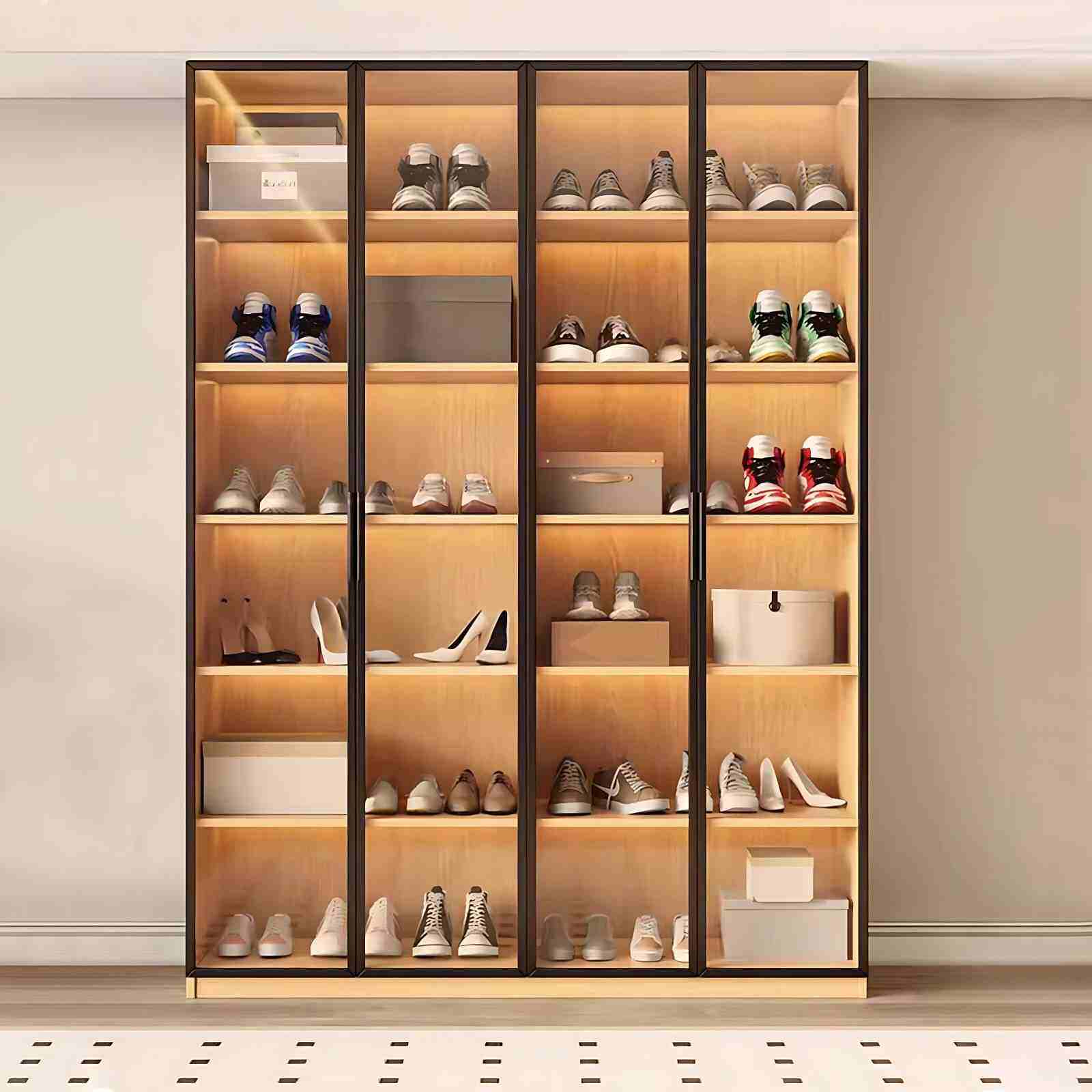
Shoe Storage Design
When planning the interior design of a shoe cabinet, we first need to determine the size requirements for different types of shoes. For example, the storage layout for standard shoes should be approximately 200 mm wide, 150 mm high, and 300 mm deep. To accommodate short boots, the width can be slightly increased to 280 mm, while the height should be raised to 300 mm. For tall boots, due to their larger size, the height should be at least 500 mm to ensure they can be properly stored.
When planning, it's also important to consider the practicality, aesthetics, and ease of use of the shoe cabinet to create a storage space that is both functional and aesthetically pleasing.
Subscribe To Our Newsletter
You Can Get The News Of Our Products
SIGN UP
Payment Methods