
 USD
USD GBP
GBP
 EUR
EUR












What basic things do you need to know about bathtubs before buying one?
Bathtubs come in a variety of shapes, materials, and colors. However, before you even get to the selection stage, you'll likely fall into one of two categories that will narrow down your choices:
(1) You have physical limitations that the new barrels must fit (e.g., replacing existing barrels during renovation).
(2) You have no restrictions and can choose almost any type of bathtub (e.g., with new houses, bathroom accessories or renovations that require renovation and moving of existing walls, plumbing, etc.).
Let's continue by learning what you should know when choosing a new bathtub.
I. Types of Bathtubs
There are many types of bathtubs, each offering a different purpose in the bathing experience.
(1) General
Although it may not be an actual technical classification, a general bathtub is one that most of us are probably familiar with. It can be used to clean children or your pets, and it has multiple uses.
(2) Soaking Bathtubs
Soaking bathtubs are typically deeper than standard bathtubs, allowing you to fully immerse yourself in the water. They come in a variety of styles and shapes, varying depending on the amount of water they hold. Claw-foot and vintage freestanding bathtubs fall into this category because they usually have higher sides and a larger water capacity than traditional bathtubs.
(3) Walk-in bathtubs:
Walk-in bathtubs provide a door that allows you to enter the tub without having to climb over the edge. They are helpful for the elderly and anyone with mobility issues. There is a seal on the door that allows the tub to be filled with water when it is full.
(4) Whirlpools
and Air Baths Whirlpools and air baths provide a therapeutic bath by injecting water and bubbles into the tub at key points, giving you a massage-like sensation. The difference between a whirlpool and an air bath is that a whirlpool injects water into a tub, agitating it, while an air bath pushes air into the water through its piping system, creating thousands of bubbles that energize the water. These types of tubs are more complex than others because they include pumps, filters, hoses, and other devices that circulate and “energize” the water.
II. Bathtub Material
Once you've determined the type of bathtub, you should know what materials they are made of. Each type of bathtub has its own highs and lows, and not all types are made of all materials. In other words, you probably won't find an air tub made of cast iron.
(1) Cast iron
Cast iron is a very durable material, usually covered with a ceramic enamel coating. Cast iron bathtubs are arguably one of the most durable fixtures in the home, potentially providing reliable service for decades.
Cast iron bathtubs are typically wall-mounted (surrounded by three walls) or freestanding. Their coating is durable and easy to clean, as you wouldn't want to use aggressive scrubbing techniques that could scratch the surface. Enameling will eventually wear down or peel, revealing the cast iron substrate, which can rust. Finally, cast iron tubs are heavy, and with the weight of the water, they require a good supporting structure.
(2) Steel
Enameled Bathtubs (or sometimes called steel enamel bathtubs) look similar to cast iron bathtubs but are lighter in weight. Like cast iron, their surfaces are easy to clean and maintain, and their lighter weight means they are easier to fit into renovated bathrooms than heavier cast iron bathtubs. They are also prone to rusting if any enamel chips or scratches expose the steel underneath.
(3) Acrylic
acid. Acrylic acid is a plastic and another material used to manufacture bathtubs. Its advantages include its high gloss, similar to the enamel finish on cast iron and steel basins, and its lighter weight than steel. It is more easily scratched, but these scratches are also easier to repair compared to enamel surfaces.
Because acrylic is an easy-to-form material, it is commonly used in whirlpool tubs and air baths, which can come in many different shapes and sizes.
(4) Fiberglass Gelcoat (FRP)
Another material used to manufacture bathtubs is fiberglass reinforced plastic (FRP), which is covered with something called "gelcoat". You will find some whirlpool bathtubs and air tubs made of this material because it is easy to shape. The gel coating provides a smooth, glossy surface to the bathtub and makes it easy to clean. It is similar to acrylic but is generally not durable because it can scratch and/or crack if hit hard.
(5) Composite
Materials: Composite bathtubs have an enamel-coated finish. These types of bathtubs aim to achieve the advantages of cast iron, such as heat retention and a durable, smooth surface, without the weight of cast iron. These composite bathtubs weigh about one-third of cast iron, which should be considered if you are replacing a second-tier bathroom bathtub. Some users report slight warping and/or squeaking when using composite bathtubs, although experiences vary and are sometimes related to installation techniques.
(6) Artificial
Marble Artificial marble is another form of " artificial stone , " typically finished as an artificial stone bathtub, where crushed marble is combined with resin to create a solid surface product. In this respect, you could say it's similar to a quartz countertop. Cultured marble is usually coated with a clear gel coating to provide a durable, easy-to-clean, and stain-resistant surface finish. It has the ability to be "cast" (poured into a mold and shaped), making it a good material for bathtubs. It is also a brittle material and cannot tolerate overly tight faucets and spouts, which may cause the surface to crack. That's okay. You can seamlessly glue the cracked surface to any length without leaving any glue marks.
(7) Wooden
bathtubs are definitely a unique style choice that can look beautiful. Wood requires a very good surface sealant to prevent deterioration. Bathtubs made by piecing together several planks of wood must be tightly joined and the seams sealed to prevent leaks. Long-term durability, how well it can withstand hard water stains, and how well it can maintain its leak-proof integrity are issues that need to be addressed before you make your choice.
III. Installation Method
Similar to kitchen sinks, there are several different bathtub installation configurations, depending on the type of bathtub you purchase.
Similarly, if you simply want to replace an existing bathtub without planning any other changes to your bathroom, you'll likely want to replace it with a bathtub of the same type. However, if you're building a new bathroom or changing its layout, you'll have more bathtub styles to choose from.
(1) Wall-mounted CO bathtub
Wall-mounted or "recessed" tubs are typically rectangular in shape and mounted adjacent to three walls, allowing access from one side. The front, back, and one side of the tub are attached to the bathroom wall or some other form of structure, such as an adjacent shower wall. The depth of these tubs varies by manufacturer and often represents a "standard" tub. Wall-mounted tubs are specified as "right-hand or left-hand" mounting. This simply means whether the drain is on the right or left side when you are facing the tub from its accessible side. Most commonly, they feature an integrated mounting flange on all three sides. This is a small, vertical lip that fits perfectly around the wall tiles or shower enclosure.
(2) Platform Installation:
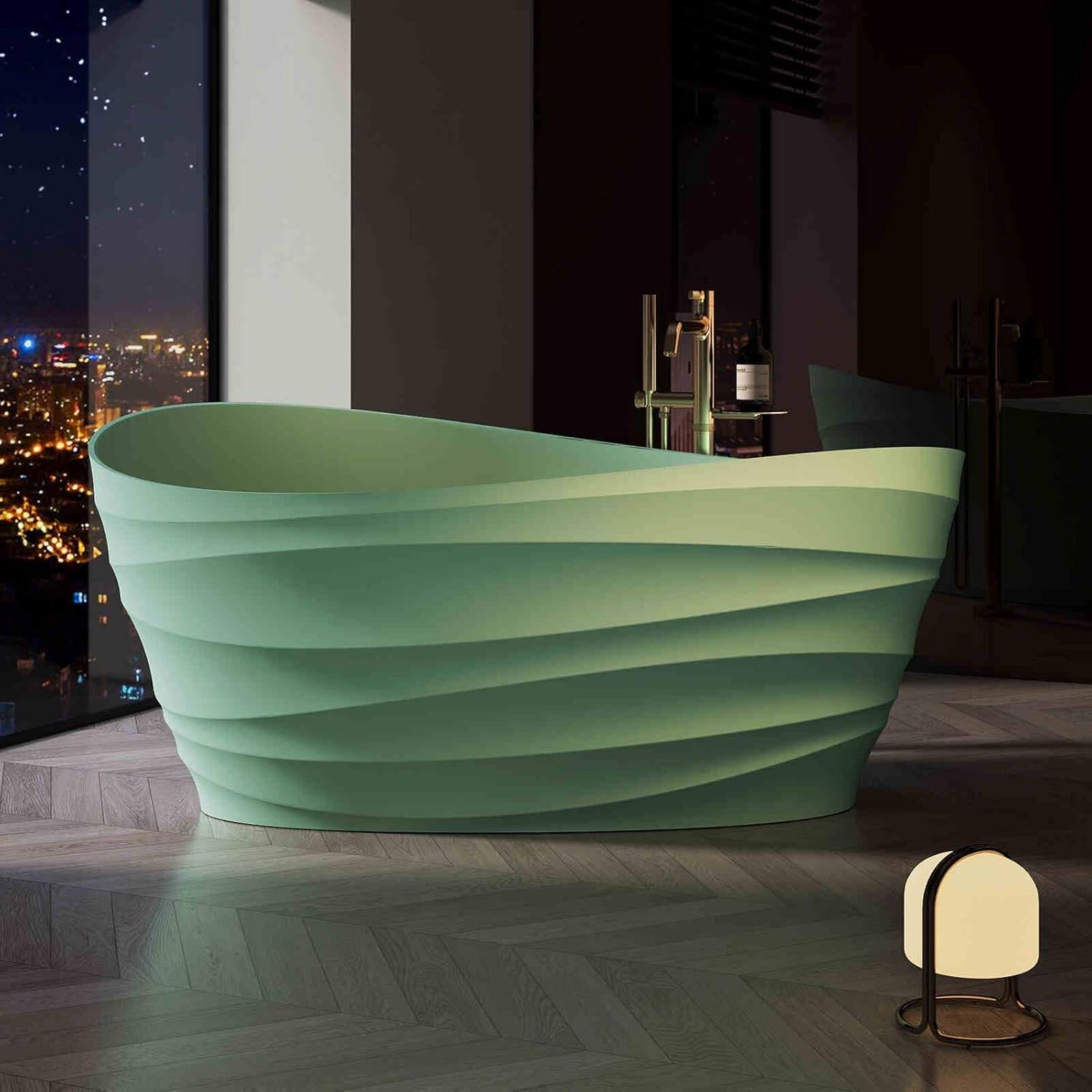
Based on the names "platform," "deck installation," and "insertion," this type of bathtub installation is located within a modular deck structure, with its edge flush with the top of the deck. Many whirlpool bathtubs and air baths use this installation method. Ideally, the deck bathtub should have a movable panel on one side to allow access to plumbing and other hardware associated with these fixtures. Another type, the insert bathtub, lowers the tub into the bathroom floor with its edge flush with the floor. This type of installation makes getting in and out of the tub more difficult, especially if the tub is deep.
(3) Installation of Submerged Bathtubs Submerged
bathtubs are essentially no different from insert bathtubs, except that the bottom edge is covered by a wraparound deck made of stone, tile, etc. The bathtub itself is supported by the floor structure beneath it. It is not “suspended” from the deck like some sunken tubs that hang from clips on the side of the countertop. One thing to consider when doing a submerged installation is the type of countertop used with it and whether the bathtub will be (or needs to be) removed. Stone countertops may require removing items around the edge of the bathtub to remove it. Now, you are unlikely to need to remove the bathtub, but there are a few things to consider in this type of installation. Freestanding Installation Freestanding bathtubs sit simply on the bathroom floor without any adjacent supporting structure. Claw-foot bathtubs and old-fashioned bathtubs are examples of freestanding installations, along with slippers and deeper tubs. Obviously, this type of installation must be located near the water and drainage pipes.
(4) Corner bathtubs
are a hybrid type that can be installed in most of the styles listed above. The orientation of the bathtub may depend on where you install it, but the key thing to remember is to give yourself enough space so that you can easily get in and out of the tub.
Okay, that concludes the basic information on choosing a bathtub provided by Langdi Sanitary Ware. If you would like to learn more about bathtubs, please contact us for consultation. Thank you for reading!