
 USD
USD GBP
GBP
 EUR
EUR
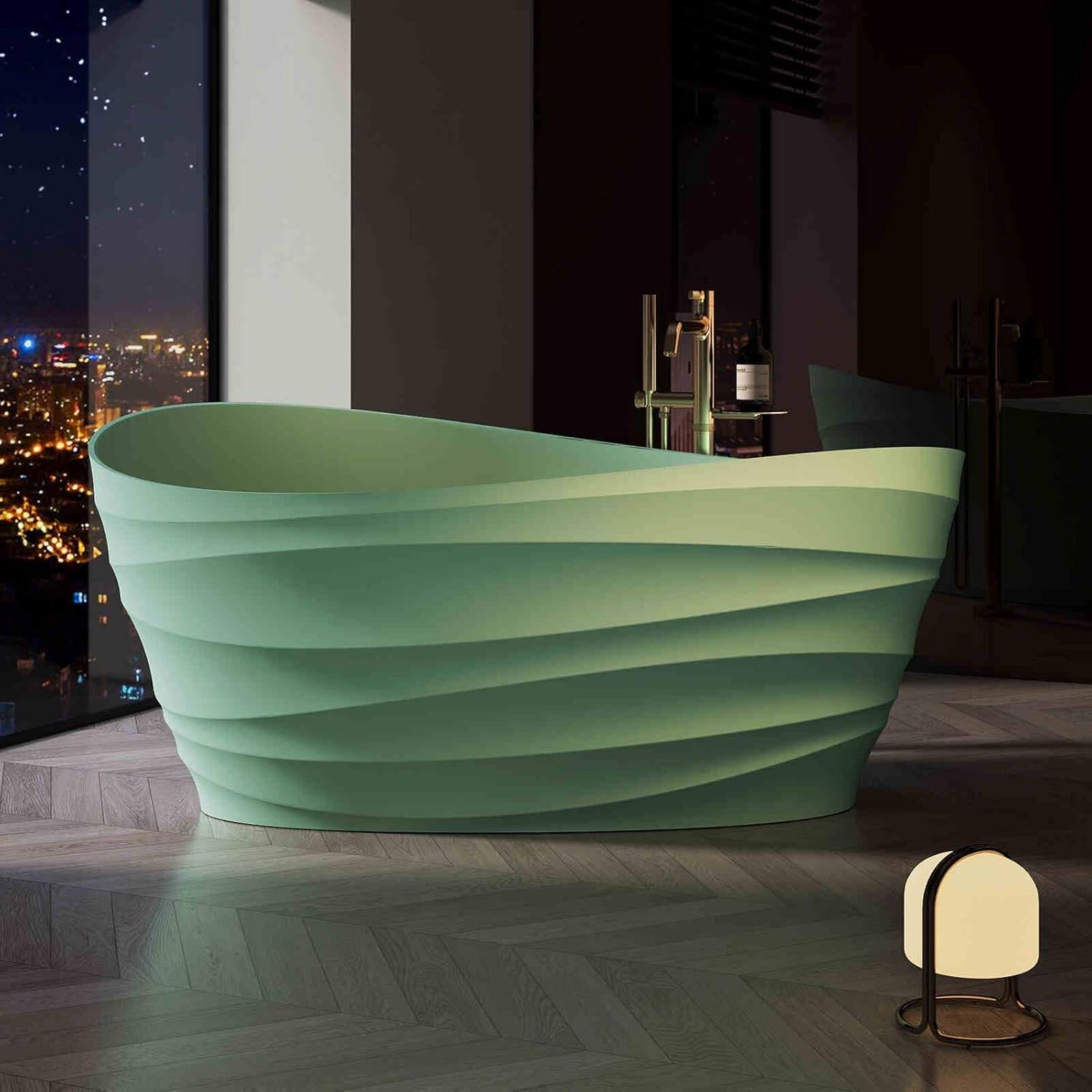

The manufacturing process and practicality of colored acrylic bathtubs
Bathtubs are categorized by material: cast iron bathtubs, steel bathtubs, artificial stone bathtubs, natural stone bathtubs, composite material bathtubs, wooden bathtubs, acrylic bathtubs, etc. Acrylic bathtubs are the most common type. Over time, with people's imagination, acrylic bathtubs have come in various colors, no longer limited to matte black, matte white, and bright white. So how are colored acrylic bathtubs made? Acrylic bathtubs are made through the following steps:
I. Molding: Molding refers to the process of softening acrylic sheets at high temperatures, sealing them in a mold, and then vacuum-forming the product. We typically use 3.2mm thick acrylic sheets, made from original colored acrylic. If the sheet is too thick, it's difficult to vacuum-form and wastes resources. If it's too thin, it's prone to cracking and difficult to reinforce. The high-temperature furnace is used to soften the sheet, typically between 180-220 degrees Celsius. After molding, we need to check the sheet for proper placement, scratches, and impurities.
2. Reinforcement: The materials needed for this reinforcement process mainly include: resin, fossil powder, cobalt solution, methyl ethyl ketone (MEK), fiber felt, fiber cloth, wood blocks, and wood strips. First, technicians will mix the resin, fossil powder, and cobalt solution. Then, before use, MEK, also known as fiberglass, is added to solidify the mixture. Generally, the bottom of the tub is lined with three layers of fiberglass and one layer of wood strips, the sides with three layers of fiberglass, and the edges with two layers. However, for massage tubs with air bubbles, the bottom layer must be three layers of fiberglass and two layers of fiber cloth to facilitate drilling holes for the air bubble nozzles. Afterward, a stainless steel bracket is installed at the bottom to secure the tub. This bracket, made of stainless steel, will not rust in the high humidity of a bathroom and provides excellent support.
Finishing: The main work in the finishing room is trimming, polishing, grinding, and fitting skirts. We generally trim the edges of the cylinders to a height of 5cm. After trimming, we grind and polish the edges, and then fit the appropriate skirts.
4. Assembly: Assembly is a major process, including drilling, testing, and assembly. The first step is drilling. The technician measures the dimensions according to the product design drawings and marks them on the product, then drills holes according to the markings. After drilling, the assembly of parts begins.
After all the components are assembled, the performance of the entire product is tested. The water test mainly checks whether each system is functioning properly and whether there are any leaks or seepage. After the water test, the cylinder block is returned to the repair room for the skirt installation. The gap between the skirt and the cylinder block must be so small that even a piece of paper cannot be stuffed into it.
The above describes the manufacturing process of an acrylic bathtub. In general, most people now choose acrylic bathtubs. Firstly, acrylic bathtubs:
- Lightweight: Acrylic bathtubs are lighter than cast iron and ceramic bathtubs, making them easier to install and transport.
- Rich in Colors: Acrylic bathtubs can be customized in color according to user preferences, thus meeting different decoration needs.
- Easy to clean: The surface of an acrylic bathtub is smooth and flat, not easy to get dirty, and very easy to clean.
- Impact resistant: Acrylic bathtubs are not easily broken, cracked, or bumped under normal use.
- High comfort level: The surface of the acrylic bathtub is smooth and elastic, so you won't feel a biting cold sensation when using it.
These are the reasons why people choose acrylic bathtubs.