
 USD
USD GBP
GBP
 EUR
EUR
The Best Home Desks for Kids and Adults: A Complete Buying Guide
Nov 02, 2025


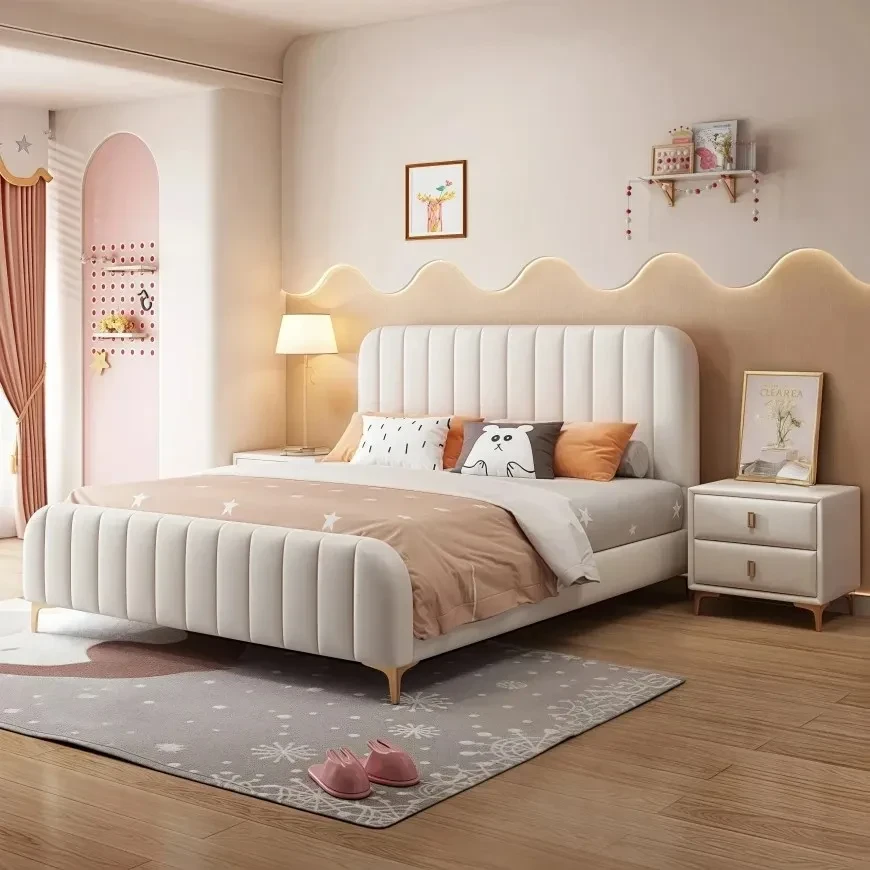
As children grow, they need their own space to call home. Designing a children's room during this phase becomes a top priority for many parents. But a children's room isn't just for sleeping.
It's also a sanctuary for a child's soul—a place where they can rest peacefully and grow independently.
Parents will eventually set up a study area for their child, as learning is essential. Thus, planning the desk layout is crucial. So how can the bed and desk be arranged effectively?
Here's an excellent children's room design solution.
The concept of a compact study.
Many parents dedicate a separate study for their child, hoping they can learn in a quiet environment. However, we might consider combining the children's room and study into one space, allowing the children's room to serve both recreational and academic functions.
The children's room is where children rest peacefully and should also be where they acquire knowledge, while a study is solely for learning and cannot accommodate other functions.
Merging the bedroom and study is an excellent choice for families with larger children's rooms. This approach not only expands the space but also significantly enhances its functionality.
The children's room serves as both a place for rest and sleep and a space for learning. It is neither solely for sleeping nor solely for studying; it creates an independent space for the child.
It also cultivates a child's ability to learn self-reliance. Every piece of furniture in the children's room—from the bed to the desk—holds unique significance distinct from other spaces. These items aren't merely placed in the room; they empower children to grow independently.
Desk and Storage Cabinet Design.
First, let's explore how to arrange the desk for maximum functionality.
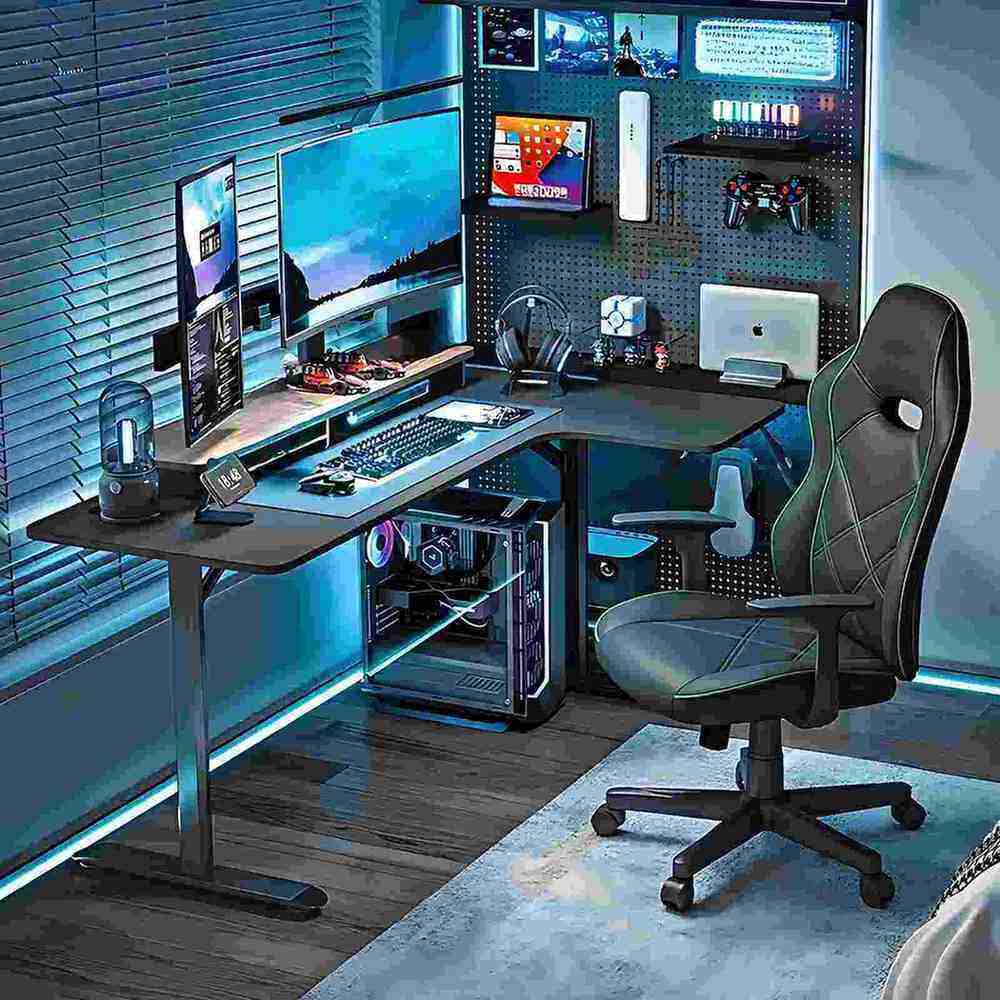
Placing the desk requires ensuring the study area has ample lighting to prevent fatigue during learning. How can this be achieved?
Some might position the desk near a window for natural light, but this isn't ideal. When sunlight is intense, it can directly hit the desk.
This not only disrupts concentration but also strains eyesight. Ideal lighting comes from the side. Therefore, position the desk against one wall with the window on the opposite side. This allows light to enter from the side, providing illumination without causing glare.
Similarly, for storage cabinets, we designed them as an integrated part of the desk to save space. This combines two functions, allowing school supplies to be stored within while keeping the children's room tidy and organized.
This design reduces the cluttered feel of the room while maximizing the storage cabinet's functionality—a win-win solution well worth emulating.
As we can see, when designing a children's room, the designer must consider not only the size of the space but also the functional layout. Integrating these two functions into the design is the optimal solution.
Room Division and Color Scheme.
If you want to make the children's room feel larger, the simplest method is to remove the partition. However, this isn't the most ideal approach because the partition serves a purpose—it reduces visual impact.
Moreover, partitions can accommodate plumbing extensions, opening up more possibilities for the room. They can also serve as hidden closets—creating ample storage without appearing intrusive.
A children's room shouldn't be uniformly lit like a stage. Instead, varied lighting can enhance the ambiance.
For larger children's rooms, recessed light strips can create an effect that makes the space feel more spacious and bright without being overly distinctive or jarring.
With growing safety concerns, many families prioritize bay window designs, valuing both aesthetics and security. However, bay windows consume significant space, necessitating thoughtful design solutions.
Preserve bay windows whenever possible. They add leisure space to the children's room, offer scenic city views, and maintain safety standards.
Addressing safety concerns, bay windows can be designed as fixed windows. This eliminates fall hazards, minimizes space consumption, and maintains aesthetic appeal.
For families living together, creating a satisfying home environment is paramount. Color coordination plays a crucial role here. Compared to parents, children often prefer vibrant, lively color schemes over subdued tones.
Therefore, we can try unifying the overall color scheme of the children's room in light blue—vibrant yet understated, creating an airy feel without appearing too rigid. This is an excellent choice.
Conclusion
Every item carries its own symbolic meaning, all serving the purpose of supporting a child's independent growth. Don't mistake simple placement for design; learn to leverage ordinary objects to achieve greater impact.
Only through thoughtful planning can space be utilized to its fullest potential. Finding the optimal solution is a challenge that demands continuous innovation and design inspiration.
Subscribe To Our Newsletter
You Can Get The News Of Our Products
SIGN UP
Payment Methods